Employee Health and Safety

Employee Rights in the Workplace

1. Employees have the right to know

  • about job-related hazards, including safety hazards, health hazards, and latency periods.
  • how job-related hazards can harm them.
  • how to control or manage hazards they may be exposed to in the workplace.

2. Employees have the right to participate

  • as a member of the Joint Health and Safety Committee or as a Health and Safety representative.
  • in making accommodations about health and safety in the workplace.
    by asking questions and being consulted.

3. Employees have the right to refuse unsafe work

  • that puts themselves or another worker at risk. Employees are required to follow the procedure for refusing unsafe work. The employee must inform the employer of the refusal and the employer must investigate the incident.
Refusal of Unsafe Work

Staying Safe In The Community

Pre-Visit Strategies

  • Familiarize yourself with the area.
  • Plan the safest route to and from the client’s home.
  • Know emergency numbers and the local transit route.
  • Use call block and do not give clients personal phone numbers.
  • Wear proper attire and appropriate footwear.
  • Advise the office if visits are delayed.

Public Transit Safety Tips

  • Wear light coloured clothing for evening visits.
  • Use elevator safety tips.
  • Sit in designated safety areas on public transit and sit close to the driver if possible.
  • Stay alert and mindful of your surroundings.
  • Keep to well-lit routes and well-traveled streets. Do not take short cuts.
  • Walk briskly and with purpose. When possible keep hands free.
  • Walk against the flow of traffic. Never wear headphones or use your phone while walking.
  • Do not walk through a crowd or engage in conversations with strangers.
  • Avoid using public phones and ATM machines in unfamiliar areas.
  • If someone tries to rob you, give up your property.
  • If you think you are being followed while walking, cross the street and walk to the nearest open store or restaurant.

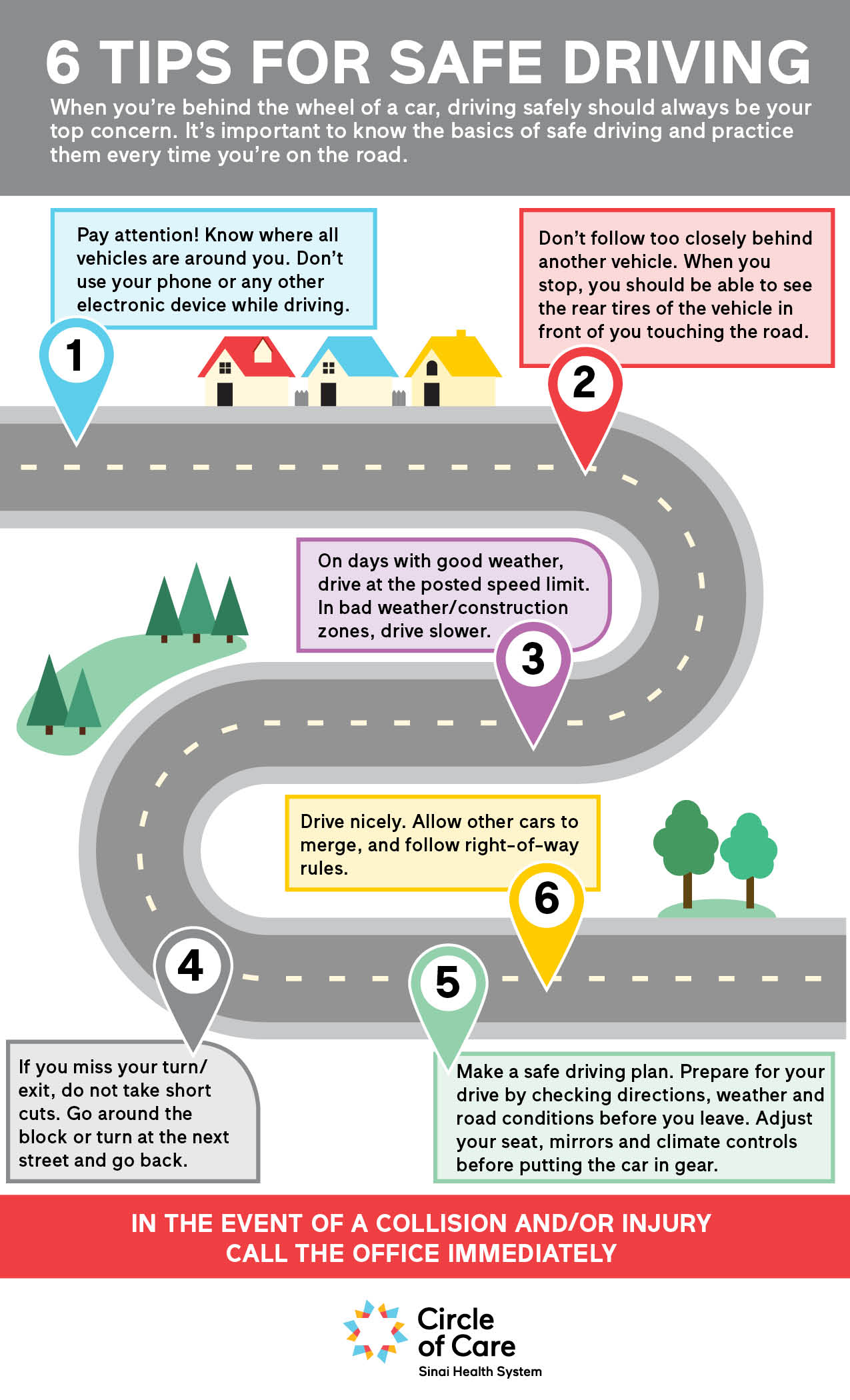
Car Safety Tips

  • If you are being followed while driving, drive to the nearest safe building.
  • Never allow someone to force you into a vehicle. Fight back and roll under your vehicle if possible.
  • Some suggested items to keep in your vehicle:
    • Booster cables
    • Cloth or paper towels
    • Compass or GPS
    • Emergency food pack
    • Extra clothing
    • Fire extinguisher
    • Ice scraper and brush
    • Survival candle and matches
    • Sand, salt, or kitty litter
    • Shovel and tow chain
    • Flares
    • Traction mats
    • Flashlight
    • First aid survival kit
    • Survival blanket

Client Home Visits

  • Never enter a client’s home if they are not scheduled for a visit.
  • Stay focused and alert in hallways, elevators, and stairwells.
  • When entering a home, pause and assess the situation. Locate the phone, any obstacles to exits. Do not enter a home if there is a visible threat to your safety.
  • Introduce yourself, state the purpose of your visit, and wait to be invited in.
  • Do not bring valuables into the client’s home.
  • Recognize the first signs of change in your client’s behaviour or others in the home.
  • Leave the client’s home, if you are asked to leave.
  • Immediately report unusual occurrences to the office.

General Risk Factors and Hazards

  • Assess for unsafe conditions in the home environment and consider the following:
    •  Exterior or entrance to the building/home
    •  Chemical, biological, and environmental hazards
    • Fire hazards
    • Physical and ergonomic hazards
    • Fall hazards
    • Personal safety hazards
  • When assessing the exterior and interior of a client’s home, consider the following:
    • Obstacles
    • Unsafe buildings
    • Clutter
    • Poor lighting
    • Lack of handrails
    • Ice or snow
    • Aggressive animals
    • Pests
    • Cigarette smoke
    • Gasoline, solvents, and improperly stored paints
    • Compressed gas
    • Improperly located smoke detectors or no smoke detectors
    • Lack of portable fire extinguishers
    • Lack of parking or safe parking
    • Home located in high risk area
    • People “hanging” in area
    • Lack of building security
    • Exits lacking/blocked
    • Presence of drugs or weapons
    • Inadequate heat or ventilation
    • Unsafe or inadequate or faulty equipment
    • General unsanitary conditions

Safe Operating Procedures

SOPs

Your Safety is a Priority


Learn about potential risks in the community and practical tips and strategies for navigating these risks using the following resources:

Preventing Workplace Violence

  • Circle of Care is committed to the prevention of workplace violence and to a violence-free workplace.
  • Any act of violence committed by or against anyone is unacceptable conduct that will not be tolerated.  Every effort has been made to identify possible sources of violence and to implement procedures to control the risks.
  • No employee, volunteer, or any other individual associated with Circle of Care shall subject any other person to workplace violence or allow or create situations that allow workplace violence to occur.  Everyone is expected to uphold this policy and to work together to prevent workplace violence.

Taking Care of Yourself

As PSWs and Homemakers, it is important to have an awareness of how to maintain and promote good health and safety. Here are some ways you can do this:

  • Be sure to eat and exercise regularly and get plenty of sleep.
  • If you are sick, please inform the office and do not go to work. As well as taking care of yourself, you must protect the health and wellbeing of clients.
  • If you know that your client has a communicable disease, report this to your supervisor and the office.
  • If you smoke, try to quit or cut down.
  • Be aware of the dangers of excessive alcohol use and using non-prescription drugs.
  • Let your coordinator and supervisor know if you are stressed out or feeling down. Sharing how you are feeling is the first step in getting help.
  • Be sure to take breaks and practice self-care.

Safe Footwear to reduce Slips, Trips and Hazards

Yellow shoes with laces
Wearing safe footwear is very important for you own safety. At Circle of Care, we expect that proper footwear is worn by all PSWs and Homemakers.

  • Wear only closed shoes with flat or low heals.
  • Wear shoes with soles that are not slippery.
  • Sandals, slippers, flip-flops, and high-heeled shoes are not to be worn on the job as they could cause injury.
  • Never work in bare or stocking feet.
Safe Footwear Policy

Bed Bugs

Circle of Care works hard to provide our staff with the safest work environment possible. If we are notified that a client’s home has a bed bug infestation, you will be notified immediately and advised on how to protect yourself and your client.

What are Bed Bugs?

Bed bugs are small insects with no wings and a flat oval body, that feed on human and animal blood. Bed bugs typically bite at night; bites can occur anywhere on the skin, including the face, neck, arms, legs, and chest. While bed bug bites can cause a raised bump and itchiness, bed bugs cannot transmit infectious diseases. Bed bugs can be found anywhere, but commonly hide in sleeping areas such as in mattress pads, behind headboards, night tables, and box springs. Bed bugs infestations can happen more often in multi-unit buildings (e.g. apartments, retirement homes, condos) and in group situations (e.g. group homes, shelters, etc.).

CSS and SC Considerations:

  • Schedule the visit at the end of the PSW’s work day.

PSW Considerations:

  • It is important to respond promptly and sympathetically to clients and families who report bed bug problems to you directly, or if you suspect that a client may have an infestation. In these situations, report to the office immediately at 416-635-2860, so a note is made on the client’s file and appropriate personnel such as your supervisor are notified.

Signs of a Bed Bug Infestation:

  • Blood stains, spots, and streaks from crushed bugs on bed sheets
  • Rusty or tiny black spots of excrement on sheets, mattresses, clothes, and walls
  • Bed bug eggs (are the size of a grain of rice when ready to hatch)
  • Egg shells or shedded skins
  • When infestations are severe, you may notice an offensive, sweet, musty odour
  • Bites on the client’s skin, which are usually in a cluster or linear pattern
  • Pets scratching bites

Recommended PPE:

  • Isolation Gown
  • Shoe Covers
  • Gloves

Protecting Yourself From Bed Bugs

Before Entering a Client’s Home:

  • Wear old clothes if possible.
  • Avoid wearing pants with cuffs.
  • Wear tight fitting clothes and tie clothing close to your body. Tuck your pants into your socks.
  • Wear light coloured clothing to easily identify any bugs that may be on your clothing.
  • Wear the recommended PPE provided by the office to protect yourself and to prevent the spread of bed bugs.

While in a Client’s Home:

  • Avoid sitting on furniture. If you need to sit, sit on a hard surface without fabric.
  • Meet in a setting where bed bugs are less likely to be present such as in the kitchen area. If possible, try to avoid the bedroom or sleeping areas.
  • Limit the number of personal items you are bringing into the home. Leave them in your car or put them in a plastic bag.
  • Hang your bag or coat on a door knob or hook instead of on the floor or a chair.

Leaving a Client’s Home:

  • At the door or outside of the home, inspect your clothing and personal belongings and stamp your feet firmly, as if knocking snow or mud off of your boots.
  • If possible, keep a change of clothes available and place your work clothing in a plastic bag or container.

Upon Returning Home:

  • Remove outer clothing immediately and keep it separate from general laundry.
  • If time permits, put the clothing in a hot dryer for 20 minutes. If not, put clothes in a garbage bag and tie it until it can be washed.

References

Health Canada. (2022). Bedbugs – what are they?

https://www.canada.ca/en/health-canada/services/pest-control-tips/bedbugs-what-are-they.html