
vector illustration of a diverse crowd of people

The Importance of Health, Equity, and Diversity in the Workplace

At Circle of Care, we recognize, respect and celebrate the valuable differences that each of us brings to our organization and to the community.

Circle of Care is dedicated to health equity in all aspects of its operation including:

  • Fostering a positive and respectful  work environment that is free from harassment for all our clients, employees, students and volunteers
  • Providing an inclusive working environment where everyone feels valued and respected
  • Respecting the diversity and dignity of every client, caregiver, employee, student and volunteer
  • Providing equitable and accessible services for clients and their caregivers

Diversity includes, but is not limited to, age, gender, ethnicity, physical and/or mental disabilities, sexual orientation, race, nationality, marital and/or parental status, lifestyle, religion, and education.

Especially in healthcare-related industries, we know that emotions can run high and many of our jobs can be very difficult. It is especially important to remain aware that we need to respect the people that we work with on a daily basis and make sure we are all contributing to a safe, inclusive working environment.

This means we are required to have an understanding of what constitutes respect, what our accountabilities are to our profession and to Circle of Care, and to know what to do in a situation where respect, diversity or equality may be questioned or at risk. A respectful, equitable and diverse workplace will mean different things to different people. But it is important to know that there is an elevated code of conduct that is expected of everyone who works at Circle of Care. The relationship people have at work is just as important as the work itself.

Our organizational values and priorities (Accountability,  Person-Centered Care, Diversity, Ethical Behaviour, Fiscal Accountability, Innovation, Learning, Safety and Collaboration) are important because they were not designed or created by HR or Executives – they are designed and exemplified by all of us – employees, clients & families. This is why it is so important for us to have measures in place that protect these values.

We must also comply with legal and legislative requirements and our Health Equity, Respect and Diversity component helps us to achieve this. Part of understanding Health Equity, Respect & Diversity is about being able to clearly define unacceptable behaviour or behaviours that contradict our mission, vision, and values. We want you to be able to protect yourself by knowing what is considered acceptable, but also to ensure that you know your rights in the workplace and the behaviour you can expect from others while you are at work.

To clearly outline what is acceptable and what is not, we have created organizational policies, such as Workplace Harassment, Workplace Violence, Discrimination, Code of Conduct, Anti-Bullying and Anti-Racism, which through enforcement of these policies, we will ensure a safe and comfortable working environment. The bottom line is that if someone comes to work each day and is being harassed, feeling like they are being treated as ‘different’ or feeling disrespected, how can they possibly be productive? How can they provide the care and nurturing relationships that Circle of Care expects?

Through awareness and enforcement of our organizational policies, expectations and values related to Diversity, Equity and Inclusion (DEI), your rights and responsibilities as per governing legislation, will contribute to a safe and inclusive work environment.   While we do our best as an organization to minimize the changes of anyone experiencing inequity, discrimination, violence, harassment and/or discrimination, we want to ensure that you know what to do in case it does occur to you. We encourage you to review our policies related to DEI, harassment, discrimination – and should you ever experience an incident of hate or discrimination, please make sure you are reporting this to your Client Services Supervisor (CSS) or to Human Resources, so that we can take the necessary steps to follow up with all parties involved.

Diversity, Equity and Inclusion Policy

Governing Provincial Legislation

We are governed by a number of federal and provincial bodies when it comes to creating policies that protect the rights of individuals. Our governing bodies are:

  • Criminal Code of Canada
  • Ontario Human Rights Code
  • Occupational Health & Safety Act Amendment

What is Respect in the Workplace?

At Circle of Care, we consider equity, respect and diversity to be largely encompassing as “respecting the self and others.” Within this definition includes:

  • Respect for the environment, or physical spaces where we work and do business, whether this be in our offices, in the community, in client’s home, while using transportation or other
  • Respect for other people’s privacy, their physical space, and their belongings
  • Respect for different viewpoints, ways of life, occupations, philosophies, religions, gender, lifestyle, ethnic origin, physical ability, beliefs and personality – in other words, embodying diversity

Circle of Care Values & Our Policies

The scope of Circle of Care’s policies apply to:

  • All employees
  • All classifications of employment (meaning, full-time, part-time, contract, volunteers, students) and all roles
  • All locations of our business (including our offices and in client homes)
  • Any member of an agency or other business that Circle of Care is currently engaged in business with, or has a contractual agreement for services

It is important to know that what constitutes the workplace is much more than the four walls of a building. It can be a vendor’s location, being at a grocery store with a client, or being at an offsite conference location during off hours.

Harassment

Harassment is defined in the Ontario Human Right’s Code as: engaging in a course of vexatious comment or conduct that is known or ought reasonably to be known to be unwelcome.
Vexatious: causing or tending to cause annoyance, frustration, and/or worry.

Harassment can include words or actions that are known, or should reasonably be known, to be offensive, embarrassing, humiliating, demeaning or unwelcome based on the grounds of discrimination. As you can see by this definition, which has been taken directly from the legislation, harassment is something that is known or ought to be known as unwelcomed. This means that often times harassment is about perception and what the other person perceives to have occurred.

Harassment is a course of conduct – or, a pattern of behaviours. More than one incident is usually required to classify harassment. Harassment also creates a ‘negative’ or ‘hostile’ work environment which will, most times, interfere with job performance.

It will be considered to have taken place if a reasonable person ought to have known that the behaviour would be perceived as unwanted or unwelcome.

Other kinds of harassment include:

  • Personal Harassment
    • Any unsolicited, unwelcome, disrespectful, or offensive behaviour that has underlying sexual, bigoted, ethnic, or racial connotation
  • Racial/Ethnic Harassment
    • Any conduct or comment which causes humiliation to an employee because of their racial or ethnic background, their colour, place of birth, citizenship, or ancestry.
Workplace Harassment Policy

Sexual Harassment

Now that we understand the definition of harassment, lets expand that definition to understand what sexual harassment is. Although it is something many people don’t like to speak about, sexual harassment does occur in many workplaces. It is important to know that under the law, sexual harassment is unacceptable behaviour, and repercussions will be administered if it occurs. Workplace sexual harassment is defined as:

  • Engaging in a course of vexatious comment or conduct because of sex, sexual orientation, gender identity or gender expression.
  • Making sexual solicitation or advance where the person making the solicitation or advance is in a position to confer, grant, or deny benefit or advancement to the worker and the person knows it is unwelcomed.

Sexual harassment does not have to be sexual in nature. It could mean that someone is bothering you simply because you are a man, or a woman. Sexual harassment means someone is annoying or disturbing someone by saying or doing something that is unwanted or unwelcome and is of a sexual or gender-based nature.

Stereotyping about one gender or another can be a form of sexual harassment. It happens most often to women but it can happen to men or between members of the same sex. It may occur as a pattern of behaviour that happens frequently or it can be a single incident. Sometimes, a single incident can be serious enough to be considered harassment!

Here is a list of some examples of sexual harassment:

  • Stares/leers
  • Name calling
  • Sexual jokes
  • Howling/catcalls/whistles
  • Offensive, derogatory or pornographic pictures on display
  • Inappropriate touching
  • Cornering, blocking, standing too close, following
  • Demands for sexual favours
  • Verbal abuse or sexual threats
  • Sexual assault and attempted sexual assault

Even the best-intentioned compliments regarding a person’s appearance, hair or clothing, if made on a repeated basis in the work environment can set a person aside as different. Such comments can also be perceived as undermining their credibility as a professional.

Harassing comments or actions concerning what is called “prohibited grounds” (which we will review shortly) are protected under the law. Harassment is a type of discrimination.

Discrimination

Discrimination means treating people differently, negatively or adversely because of many reasons including race, age, religion, and colour. The definitions are any form of unequal treatment based on a prohibited ground that results in disadvantage, whether imposing extra burdens or denying benefits. It may be intentional or unintentional. It may involve direct actions that are discriminatory or it may be rules, practices or procedures that appear neutral but have the effect of disadvantaging certain groups of people. It may be obvious, or it may occur in very subtle ways.

It is also important to know the difference between direct and indirect discrimination. For example, under the Ontario Human Rights Code, which is provincially in Canada one of the most stringent, discrimination is not just defined as direct discrimination meaning where someone is intentionally discriminating against a person because of personal characteristics. It is also considered a discriminatory practice to unintentionally discriminate.

An example of this may be not including fellow employees in meetings or conversations because they aren’t friends, or by making well-intentioned assumptions about people’s preferences because they belong to a specific group. For example, assuming someone might not want to attend the staff BBQ because their personal preference or beliefs do not allow them to eat certain foods.

Now that we have defined harassment, sexual harassment and discrimination, here is a list of how these things might look in a work environment.

  • Abusive name calling
  • Persistent teasing
  • Offensive jokes
  • Graffiti
  • Threats
  • Insults
  • Unsolicited advances (both physical and suggestive)
  • Leers
  • Offensive/hurtful posts to social media sites
  • Offensive/hurtful text messaging
  • Cyber-bullying

With harassment, it is all about how the behaviour is perceived by others. For example, with teasing, you may think it is all in good fun but it might be unappreciated by the other person. In this regard, harassment can often be very subtle!

Any kind of workplace harassment is discrimination of what most provincial Human Rights Codes call a prohibited ground. Most provinces have some form of ‘prohibited grounds’ embedded in each of their provincial legislation.

A prohibited ground means that it is against the law, or “prohibited” for one to discriminate against people on certain characteristics, or “grounds.”

We have listed the prohibited grounds that are embedded in our provincial legislation:

  • Race
  • Colour
  • Ancestry
  • Creed (religion)
  • Place of origin
  • Ethnic origin
  • Citizenship
  • Sex (including pregnancy, gender identity)
  • Sexual orientation
  • Age
  • Marital Status
  • Family status
  • Disability
  • Receipt of Public Assistance
Discrimination Policy

Poisoned Work Environment & Bullying

Often when there is persistent harassment or discrimination occurring, people tend to feel uncomfortable in the work environment. They may feel less inclined to come into work, as well as feel less social or unsafe – whether it is physically, socially or emotionally. The reason why this occurs is because the persistent indirect harassment or discrimination has resulted in what is called a poisoned work environment.

Think for a moment about the effect that negative comments or actions have. A poisoned work environment is defined as one which allows behaviour such as insults and jokes relating to one of the prohibited grounds to perpetually exist. It does not need to be directed at anyone in particuar, but can still have the effect of creating or maintaining an offensive, hostile or intimidating environment.

A poisoned work environment cannot be treated based on perception alone – there must be facts to demonstrate that the comments or conduct results in unequal, uncomfortable, unsafe or unfair treatment or conditions.

Bullying and intimidation are other factors that can highly influence the work environment and can be rooted in harassment and discrimination. Bullying is defined as offensive behaviour through vindictive, cruel, malicious or humiliating attempts to undermine an individual or groups of people. Bullying is usually seen as acts or verbal comments that could mentally hurt or isolate a person or persons in the workplace.
It usually involves repeated incidents or a pattern of behaviour that is intended to intimidate, offend, degrade or humiliate but sometimes can involve negative physical contact. It can also be described as an assertion of power through aggression.

It is important to know that constructive feedback regarding an individual’s work or performance at work is not considered bullying, but rather to assist the employee with their work. There is no stereotype of a bully – they are all ages, shapes, sizes – they could be anyone in the workplace. It is important to know that constructive feedback regarding an individual’s work or performance at work is not considered bullying, but rather to assist the employee with their work. There is no stereotype of a bully – they are all ages, shapes, sizes – they could be anyone in the workplace.

Anti - Bullying (Workplace Harassment) Policy

Some examples of bullying are:

  • Continually criticizing others
  • Spreading malicious rumours and gossip
  • Shouting
  • Persistently picking on people in front of others or in private
  • Excluding or isolating someone socially
  • Intimidating a person
  • Undermining or deliberately impeding a persons work
  • Physically abusing or threatening abuse
  • Yelling or using profanity
  • Offensive jokes
  • Intruding on one person’s privacy by pestering
  • Spying or stalking
  • Belittling a persons opinions

It is important to know that Circle of Care has zero tolerance for harassment, discrimination or bullying of any kind. If you feel you are being bullied or are aware of bullying occurring, it is necessary to report it to your Client Services Supervisor (CSS) and/or Human Resources.

Workplace Violence

Workplace violence is defined as any physical assault, threatening behaviour or verbal abuse occurring in the work setting. A workplace may be any location either permanent or temporary where an employee performs any work related duty.

Workplace violence includes all forms of harassment, bullying, intimidation, physical threats, assaults, robbery and other intrusive behaviours. These behaviours could originate from customers or coworkers at any level of the organization. Some examples of this are threatening behaviour (i.e. shaking fists, destroying property or throwing objects); verbal or written threats (i.e. any expression of an intent to inflict harm); verbal abuse (i.e. swearing, insults or condescending language) or physical attacks (i.e. hitting, shoving, pushing or kicking).

The prevention of violence in the workplace is deeply embedded into our policies at Circle of Care. Our Bill 168 policy, accessible to all employees, is available for review on the intranet or through your manager or direct supervisor. Any indication of violence must be reported immediately to your CSS or to HR.

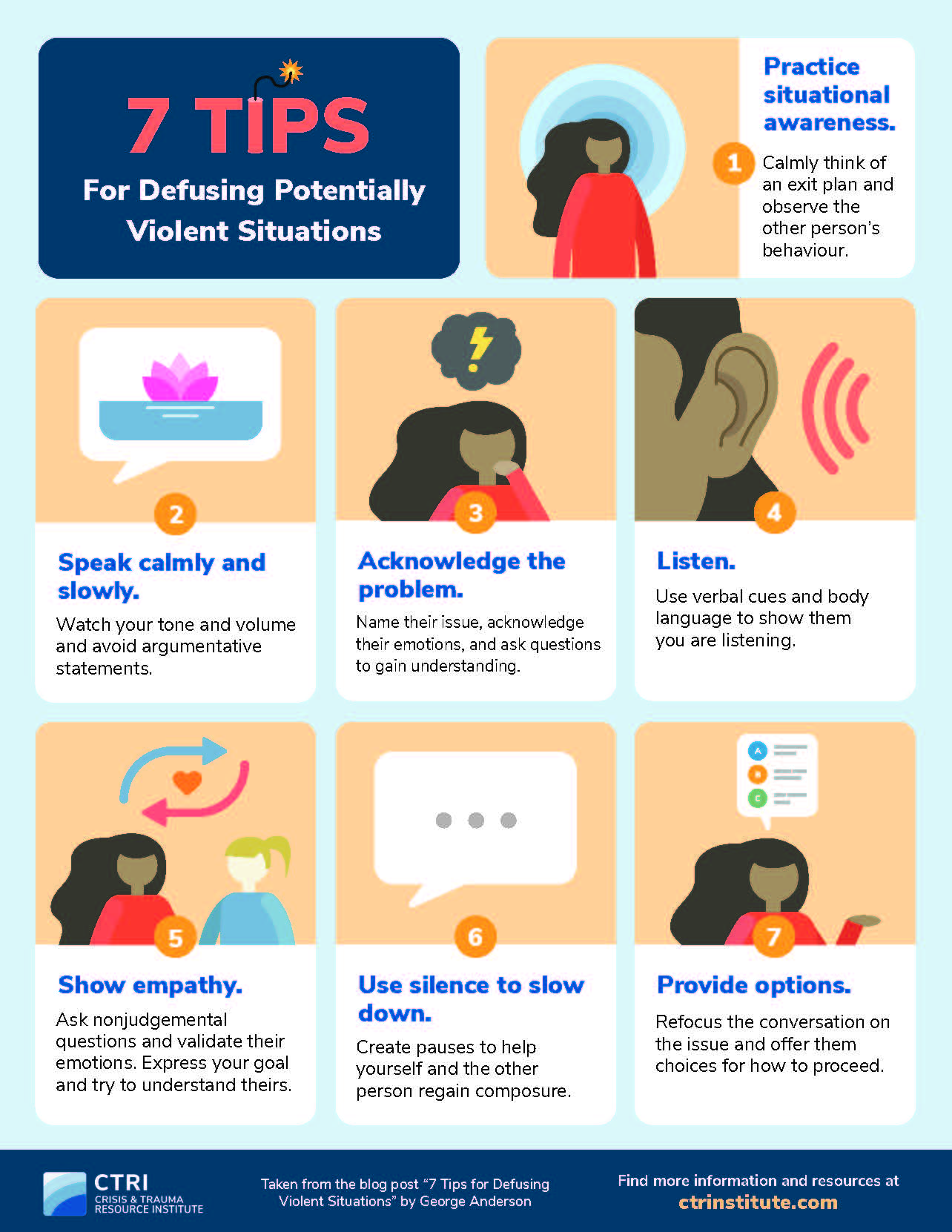
Stop, Plan, & Go

At the first signs of agitation or aggressive behavior,

STOP

Determine what may be escalating the situation and what safety measures can be implemented to ensure your safety,

PLAN

Once safety measures are in place,

GO

If situation continues to escalate, remove yourself from the situation and contact your Client Service Supervisor or Coordinator.

The Investigation Process

If bullying, harassment, violence of any kind or discrimination has occurred, both the manager/direct supervisor and the employee have very important roles to play in terms of reporting and investigating. These steps are taken directly from Circle of Care’s policies and are expected that all employees of all status of employment understand and comply.

First let’s review the step by step process for reporting and investigating a bullying allegation.

Step 1: Awareness

Managers and Supervisors are responsible for ensuring that employees, volunteers and students have the information that they need to protect themselves from workplace bullying. This means that managers must have a conversation about Circle of Care’s anti-bullying policy to ensure that all employees are aware and understand what the policy entails.

Step 2: Report Incidents Immediately

If an employee, volunteer or student witnesses or are a victim of bullying, they must contact their Manager or Supervisor immediately. If uncomfortable with reporting to their Manager or Supervisor, or their Manager or Supervisor is considered the perpetrator, the employee (or volunteer or student) are to approach another management team member who they are comfortable with and report the incident. The Manager or Supervisor will then report the incident to HR and a HR will fully investigate the matter.

Step 3: Confidentiality

Circle of Care will exercise good judgment and care at all times to avoid unauthorized or improper disclosures of confidential information. Confidentiality in matters of workplace bullying will be respected.

Step 4: Penalty or Corrective Actions

An employee or volunteer that subjects another employee, client, or other person to workplace bullying may be subject to disciplinary action up to and including termination.
All documents related to a complaint or incident of bullying, including the written complaint, witness statements, investigation notes and reports, and documents related to the complainant will be maintained by our Human Resources department.

The investigation process for complaints revolving around harassment & discrimination.The investigation process for complaints revolving around harassment & discrimination. All reports of harassment made to Human Resources will be investigated thoroughly in a fair and timely manner, respecting all employees’ privacy as much as possible. Interviews will be conducted with the complainant, the alleged harasser, and any witnesses.  All employees have a responsibility to cooperate in the investigation.  If the investigation reveals evidence to support the harassment complaint, the harasser will be subject to disciplinary action.

The investigation will involve:

  1. Getting all pertinent information from the complainant;
  2. Informing the alleged harasser of the details of the complaint, and getting her or his response;
  3. Interviewing any witnesses;
  4. Deciding whether, on a balance of probabilities, the harassment did take place; and
  5. Recommending appropriate remedies, penalties, or other action.

Corrective Actions

Some forms of disciplinary/corrective action can include:

  • Apology
  • Counseling
  • Written warning
  • Transfer (of harasser)
  • Suspension
  • Compensation for lost wages incurred by complainant
  • Dismissal – for just cause

Note: Corrective action is determined by numerous variables, including severity & complexity of the situation/collective agreements.

The appropriate remedy will be dependent upon the situation. Different things will be considered including the nature and the severity of the complaint, the impact the incident had on the parties involved and whether or not the individual had previously done something inappropriate under our governing policies.

Confidentiality

Circle of Care will do everything it can to protect the confidentiality and privacy of all parties involved before, during, and after the investigation. We will also ensure that the complainants and respondents are treated fairly and respectfully.

Circle of care will protect privacy so long as doing so remains consistent with the enforcement of this policy and adherence to the law. Neither the name of the person reporting the facts nor the circumstances surrounding them will be disclosed to anyone whatsoever unless this disclosure is necessary for an investigation or disciplinary action. Any disciplinary action will be determined by Circle of Care and will be proportional to the seriousness of the behaviour concerned. Circle of Care will also provide appropriate assistance to any employee who is the victim of violence, discrimination, harassment, or bullying.

Employee Accountability

We have reviewed the accountabilities and the complaint procedures, but in closing we want to take a few moments to reflect once more on the employee accountabilities with Circle of Care’s policies surrounding Health Equity, Respect and Diversity and to add some additional tips to help manage potentially difficult situations.

  • We all need to comply and understand our policies around harassment, discrimination, diversity and anti-bullying. In other words, treat everyone with respect, compassion and dignity – even during stressful or conflicting times.
  • If comfortable make disapproval known to the harasser and report the behaviour to a manager or supervisor
  • We must try to be proactive – this means we must try to respectfully work out solutions before the situations worsens, and make sure to document all interactions. This will only assist you and your manager/supervisor if by chance the incident goes into investigation.
  • Remember to cooperate – this goes for both the employees that are indirectly and directly involved.
  • Although it can be difficult especially during stressful times, confidentiality is the key. Keep sensitive matters of bullying, harassment, discrimination and/or violence between yourself and the investigating manager/supervisor and HR.
  • It can sometimes be difficult but remember, always be honest.
  • It is important to be mindful of the different boundaries everyone has. What is appropriate to you might not be appropriate to others.
  • continue to spread the word on harassment, discrimination, anti-bullying and violence in the workplace education. It is important that we continue to educate on the impacts of all of these things. Harassment, discrimination, violence and bullying are all very serious matters.

If there are questions or concerns, please contact a representative from our Human Resources team or anyone from our supervisory or management teams. They will assist you in providing all of the pertinent information. All references and policies are available on the Circle of Care intranet site. To become more familiar with the legislation please visit the Ontario Human Rights Commission at www.ohrc.on.ca for more information.

Anonymous Incident Reporting Form

It is important, that if you are experiencing any incidents of violence, harassment, discrimination and/or hate while at work or during working hours, you report this to your Supervisor, Manager, Director, or to Human Resources.

If you would prefer to stay anonymous, please fill out our Anonymous Incident Reporting Form by clicking the button below.

Please note that the Anonymous Incident Reporting Form offers an opportunity to share your name to assist us in investigating your incident. Should you not wish to provide your name, reported incidents will still be accepted and investigated, as appropriate.

Anonymous Incident Reporting Form

We could learn a lot from crayons. Some are sharp, some are pretty, some are dull, some are bright, some have weird names and all are different colours, but they have all learned to live together in the same box.

Robert Fulghum

AODA