Diversity, Equity & Inclusion

Circle of Care stands in support and solidarity against the injustices many communities face today and we firmly denounce racism and other divisive views. As an Organization and an Employer, we acknowledge the responsibility we have to ensure we are doing better on the path to social equality and to contribute towards an inclusive workplace. Circle of Care understands that it is important to create a work environment where employees can be free to express themselves based on their unique perspectives and to ensure all employees feel included, regardless of their age, gender, ethnicity, physical and mental disability, sexual orientation, gender identity, gender expression, race, nationality, marital and/or parental status, lifestyle, religion, and education.

We also acknowledge that intersectionality can play a role in intertwining prejudices that people may face in their daily lives. Intersectionality recognizes that identities are not single social categories but are better understood as interlocking systems of social categories such as race, gender, class, ethnicity, disability, and sexuality that shape people’s lives through interactions across individual, institutional, cultural and societal spheres.

Diversity, Equity and Inclusion is an organizational priority for Circle of Care. Click below to review our DEI Strategy for the previous and current fiscal years:

DEI Strategy 24-25

DEI Strategy 25-26

Key Contacts

Circle of Care has an established committee of employees from all departments that 3 times per year to discuss Diversity, Equity and Inclusion (DEI). Our DEI Committee Chair and Senior Management Sponsor also meet every 6 weeks.  If you have any questions, concerns or suggestions related to Diversity, Equity and Inclusion at Circle of Care, please reach out to DEI Committee Chair – Kai Van Vugt (ksvirida@circleofcare.com or 647-724-5679).

Diversity, Equity and Inclusion Committee Membership

Update your Language Settings in Dayforce

We have recently updated some settings in our Dayforce software which will now allow employees to update their language preferences. There are currently 5 additional language options in addition to English:

  • Spanish
  • French
  • Filipino
  • Slovenian
  • Slovencina

To update your language preference, follow these instructions:

  • Log into your Dayforce account and go to ‘Profile’
  • On the ‘Settings’ tab, click ‘Preferences’
  • Select an option in the ‘Culture/Language’ drop down menu
  • Click ‘Save’
  • Log out to save changes

Resources

Here are some resources that you may find useful and helpful regarding Diversity & Inclusion:

Newcomers to Canada Lunch & Learn

Land & African Ancestral Acknowledgements

Acknowledging the land is an Indigenous practice that has been happening for thousands of years. It recognizes and respects the legal and spiritual relationship that Indigenous peoples have with their territories. The Land Acknowledgement is a good practice for groups coming together, such as when people from other teams meet, when we host outside agencies or when the agency meets as a whole.

I would like to start by honouring the land that we are on, which has been the site of human activity since time immemorial.
It is the traditional territories of the Huron-Wendat (When – Dat), Anishinabeg (Awe – Nish – Nah – Beck), the Chippewa (Chip – A – Wah), the Haudenosaunee (Hoe – De – Nah – Show – Nee) Confederacy and most recently, The Mississaugas of the Credit River First Nations. Ontario is covered by 46 treaties and other agreements, and is home to many Indigenous Nations from across Turtle Island, including the Inuit (ᐃ (ee) ᓄ (nu) ᐃᑦ (eet)) and the Metis (May – Tee). These treaties and other agreements, including the One Dish with One Spoon Wampum Belt Covenant Covenant, are agreements to peaceably share and care for the land and its resources. Other Indigenous Nations, Europeans, and newcomers, were invited into this covenant in the spirit of respect, peace, and friendship. We mindful of broken covenants and we strive to make this right, with the land and with each other. We are all Treaty people. Many of us, have come here as settlers, immigrants, newcomers in this generation or generations past. I would like to also acknowledge those of us who came here forcibly, particularly as a result of the Trans-Atlantic Slave trade. Therefore, I honour and pay tribute to the ancestors of African Origin and Descent.
Source: City of Toronto, Land Acknowledgement Guidance

Recommended Books, Podcasts and Videos

Our DEI Committee has cultivated a list of recommended books, podcasts, and other resources to enhance your learning on DEI related topics:

Books: 

  • Divergent Mind: Thriving in a World That Wasn’t Designed for You by Jenara Nerenberg: A personal and inspiring exploration of neurodiversity, challenging the myths and stereotypes that surround people with different brain types, such as ADHD, autism, synesthesia, and high sensitivity.
  • Subtle Acts of Exclusion: How to Understand, Identify, and Stop Microaggressions by Tiffany Jana and Michael Baran: A clear and concise handbook that helps individuals and organizations recognize and prevent microaggressions, or subtle acts of exclusion, that can harm and alienate people from marginalized groups.
  • Demystifying Disability: What to Know, What to Say, and How to Be an Ally by Emily Ladau: A friendly and accessible introduction to disability issues, written by a disabled activist and writer, that offers advice on how to appreciate disability history and identity, avoid ableism, practice good disability etiquette, and ensure accessibility.
  • We Have Always Been Here: A Queer Muslim Memoir by Samra Habib: A powerful and poignant memoir of a queer Muslim woman who survived persecution, racism, and an arranged marriage, and eventually found her voice and community as a journalist, photographer, and activist.
  • 21 Things You May Not Know About the Indian Act: Helping Canadians Make Reconciliation with Indigenous Peoples a Reality by Bob Joseph: A concise and eye-opening overview of the Indian Act, the legislation that has shaped and controlled the lives of Indigenous Peoples in Canada for over 140 years, and its ongoing impact on the relationship between Indigenous and non-Indigenous Canadians.
  • The North-West Is Our Mother: The Story of Louis Riel’s People, the Metis Nation by Jean Teillet: A sweeping and engaging history of the Métis Nation, the new Indigenous people descended from both First Nations and Europeans, who fought for their rights and recognition in Canada, written by the great grandniece of Louis Riel.
  • Unmasking Autism by Devon Price: A candid and compassionate guide to understanding autism, written by an autistic psychologist and educator, that blends personal stories, social science research, and practical tips for interacting with autistic people in healthier and more positive ways.
  • What I Mean When I Say I’m Autistic: Unpuzzling a Life on the Autism Spectrum by Annie Kotowicz: A witty and insightful mix of memoir and manifesto, written by an autistic woman, that shares the challenges and joys of a life before and after diagnosis, and offers a nuanced analysis of autistic thinking, thriving, and beauty.
  • This Book is Anti-Racist: 20 Lessons on How to Wake Up, Take Action, and Do the Work by Tiffany Jewell: A vibrant and empowering book that teaches young readers how to recognize and challenge racism and oppression, and how to take action and create change in themselves and their communities.
  • Until We Are Free: Reflections on Black Lives Matter in Canada by Rodney Diverlus, Sandy Hudson, and Syrus Marcus Ware: A collection of essays, interviews, poems, and art that reflect on the Black Lives Matter movement in Canada, its achievements and challenges, and its connections to other forms of resistance and liberation.
  • Daddy, Papa, and Me by Lesléa Newman: A charming and colorful picture book that depicts a day in the life of a toddler and his two dads, celebrating the love and joy of a same-sex parent family.
  • Pink is for Boys by Robb Pearlman: A fun and affirming picture book that breaks down gender stereotypes and encourages children to express themselves in any color they like, regardless of their gender identity.
  • Colour Purple by Alice Walker: a novel that follows an African-American teenager being raised in rural Georgie in the early 1900s.

Blogs, Websites and Other Publications: 

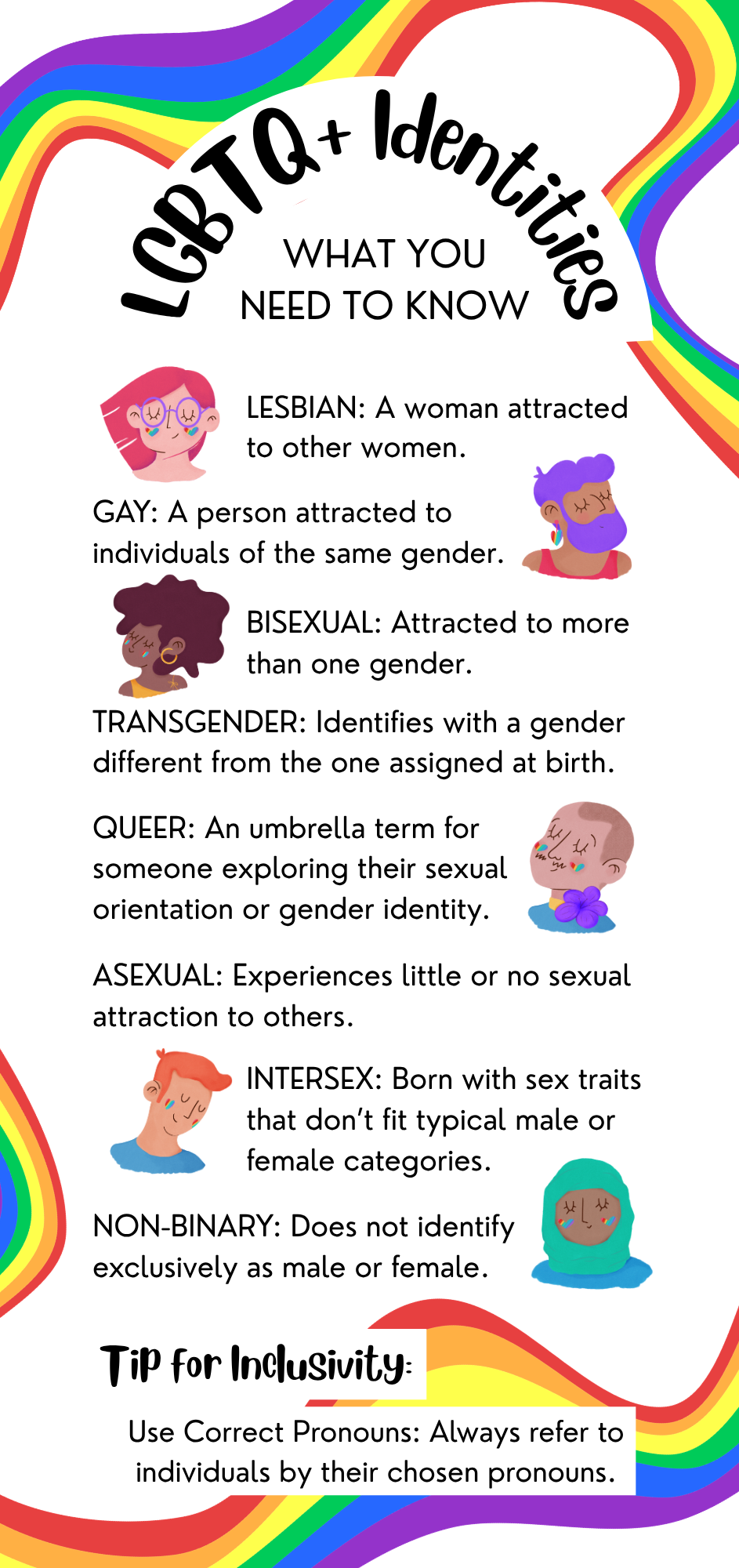
  • Quick Guide to Pronouns : A quick guide to pronouns by the Canadian Centre for Gender and Sexual Diversity, explaining what gender pronouns are, why they are important, how to use them respectfully, and how to correct mistakes.
  • Mental Health for First Nations and Inuit :A web page that provides information on mental health and wellness in First Nations and Inuit communities, including the factors that influence it, the programs and services available, and the ways to raise awareness and reduce stigma.
  • Local Organizations for Mental Health Services :A web page that lists local organizations in different provinces and territories of Canada that provide mental health services and support for diverse cultural groups, such as immigrants, refugees, Indigenous peoples, and LGBTQI2S people
  • Allyship Toolkit : This is a publication by the network of the Indigenous community in Montreal that aims to educate non-Indigenous individuals and groups on how they can use their privilege to listen, shift power dynamics, and take concrete steps towards Reconciliation-Action. It provides tools, glossary, and resources for those who want to become better allies, accomplices, or co-resisters.
  • Learning Resources – ONWA :This is a learning and resource page by the Ontario Native Women’s Association (ONWA) that provides information and support for Indigenous women, girls, and two spirit peoples who are affected by human trafficking. It includes signs of human trafficking, important information to gather when reporting a case, videos, and community resources.

Videos: 

  • Hear Our Story: the Brunswick Four : A documentary that tells the story of the Brunswick Four, four lesbian women who were arrested and harassed in Toronto in 1974 for singing a song in a bar, and how their case sparked a movement for LGBTQI2S rights and visibility in Canada.
  • The Myth of the Muslim Tide : This is a video interview by The Agenda with Steve Paikin, a TV program by TVO, featuring author and journalist Doug Saunders. He talks about his book The Myth of the Muslim Tide, which challenges the common belief that Muslim immigrants pose a threat to Western values and culture.
  • Islamophobia is Gendered : This is a video lecture by Dr. Amina Yaqin, a senior lecturer in Urdu and postcolonial studies at SOAS University of London. She discusses how Islamophobia is gendered, and how Muslim women are often stereotyped as oppressed, submissive, or dangerous. She also examines how Muslim women resist and challenge these stereotypes through various forms of expression.
  • The Road Forward : A musical documentary that traces the history of Indigenous activism in Canada, from the beginnings of the Native Brotherhood and Sisterhood, to the modern-day Idle No More movement, featuring interviews and performances by Indigenous artists and leaders.
  • DEI Sessions: Microagressions :This is a video from Jack Cooper Transport, and it is part of a leadership training series on DEI. It provides information and examples of microaggressions that occur in the workplace, and how to avoid them.

Webinars