
Cream & Ointments are medicinal preparations for external use, intended for application to the skin.
CSS Considerations: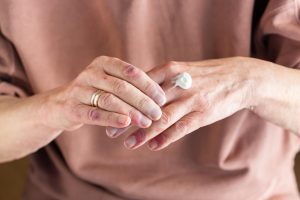
- As per the CNO, medications administered via the topical route are not a Controlled Act; therefore, nurses do not need to delegate topical medication administration to PSWs.
- CSS should assess the client’s current skin condition.
- PSWs can apply topical medications on intact skin only and cannot provide treatment to broken skin or a wound.
- The CSS must advise the PSW of an appropriate amount of cream/ointment to be used if not indicated on the prescription.
PSW Considerations:
Report to the office at 416-635-2860 if:
- The client has signs of:
- Broken skin
- Pain
- Tender to touch
- Itchiness
- The client’s skin condition is getting worse (affected area is getting larger) and the treatment is not effective
- The cream is not in a container with the appropriate pharmacy labels, or the cream is not in the original container
- The prescribed cream/ointment is running low or not available for use
Required Supplies:
- Topical ointment
- Gloves
- Soap and water (to clean the affected area)
Procedure for Applying Ointments (Topical Route):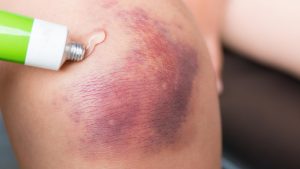
- Before beginning, assist the client with a sponge bath or shower as per the care plan, or cleanse the area where the topical medication is to be applied.
- Review the delegation notes in the client’s care plan via your mobile device.
- Explain the procedure to the client.
- Perform hand hygiene.
- Gather the ointment and materials that are needed.
- Check the label of the ointment for the expiration date.
• Note: Do not use the medication if it is past the expiration date. - Open the ointment tube or container.
- Place the cap of the ointment tube or container upside down on a table top to prevent contamination of the inner aspect of the cap.
- Put on gloves.
- Apply the topical medication onto the ordered area(s) using gloved hands, a tongue depressor, a cotton tipped applicator, or sterile gauze.
- Apply the topical medication in long and even strokes, following the direction of hair growth.
- Remove gloves and wash hands thoroughly.
- Put away all the supplies used.
Video Resource
Please click on the video link below for a visual demonstration of the procedure:
http://mosby.lambtoncollege.ca/advanced/skill/T001.html
References:
Burke, A. (2023, February 15). Medication administration: NCLEX-RN.
https://www.registerednursing.org/nclex/medication-administration/
College of Nurses of Ontario. (2022, October 21). Delegation.
https://www.cno.org/en/learn-about-standards-guidelines/educational-tools/ask-practice/delegation/
Doylee, G.R., & McCutcheon J.A. (2015). Administering topical medications.
https://pressbooks.bccampus.ca/clinicalproceduresforsaferpatientcaretrubscn/chapter/6-7-administering-topical-medications/
Mosby Nursing Video Skills. (2014). Applying topical medications.
http://mosby.lambtoncollege.ca/advanced/skill/T001.html