
What is a fall?
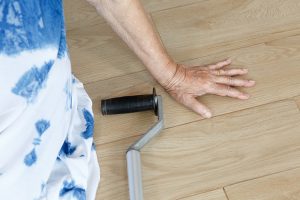
A fall is an event that results in a person coming to rest unintentionally on the ground, floor or other lower level.
A “near miss” is considered a fall even if the client was able to stop himself or herself from hitting the ground.
Why does preventing falls matter?
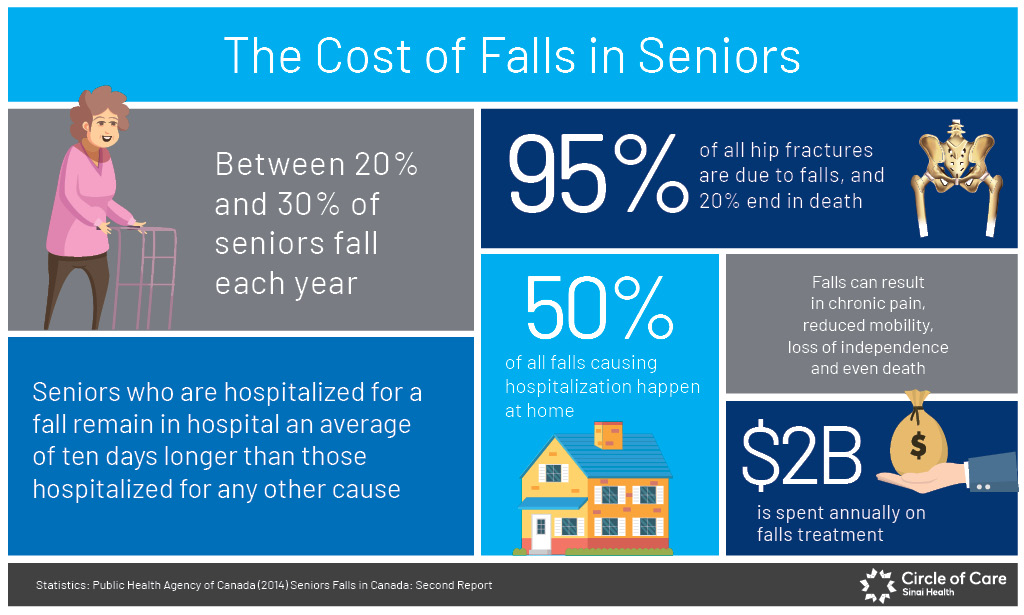
- Falls are the leading cause of injury among older Canadians.
- 50% of all falls causing hospitalization happen at home.
- Falls are the cause of 85% of seniors’ injury-related hospitalizations.
- Falls are the cause of 95% of all hip fractures
- Seniors may have trouble with their vision and hearing, which can make them more likely to fall and get hurt.
Common Risk Factors for Falls
- Personal Factors: Age-related changes, chronic conditions (e.g., arthritis, diabetes), cognitive impairment, muscle weakness, and balance issues.
- Environmental Factors: Environmental hazards (e.g., poor lighting, slippery floors, stairs), inappropriate footwear, medications that cause dizziness or drowsiness.
PSW Considerations
- PSWs are often the first people that can help preventing falls. Your daily interactions with clients give you the unique opportunity to find and reduce the risk of falls.
- Understanding the importance and impact of falls is the first step in preventing them. As a PSW, you can make a significant difference in keeping our clients safe and maintaining their quality of life.
Preventing Client Falls
When providing care in a client’s home, PSWs can take specific actions to prevent falls during daily care activities by:
- Before each visit, review the client’s care plan, focusing on their fall risk factors and any recent changes in their condition.
- On arrival, perform a quick check of the environment. Ensure pathways are clear, furniture is stable, and there are no new hazards. Ask the client if there have been any changes in condition since the last visit, such as dizziness, weakness, or confusion.
- Offer clear, calm instructions to client when providing care. Encourage the client to communicate if they feel tired or unsteady and need to pause.
- Use proper body mechanics and assistive devices when helping clients move from bed to chair, chair to toilet, etc. Encourage clients to use grab bars or handrails if available.
- Accompany the client when they need to move around the house, particularly in areas with uneven surfaces or stairs. NEVER LEAVE CLIENT UNATTENDED WHEN THEY ARE MOVING AROUND THEIR HOME.
- Stand slightly behind and to the side of the client, typically on their weaker side, to provide support.
- When walking up and down stairs, encourage the client to use the handrail with one hand while you support them on the other side, instruct the client to place their stronger leg on the next step first, and followed by the weaker leg. Remind the client to lift their feet fully to avoid tripping on the stairs.
- Encourage the client to move slowly and deliberately, to maintain balance.
- Ensure the client correctly uses any mobility aids and that these aids are in good condition (e.g., no loose wheels on walkers).
- If assisting with bathing, use non-slip mats in the tub or shower, and ensure the client has something sturdy to hold onto, like a grab bar. NEVER LEAVE CLIENT UNATTENDED WHEN BATHING.
- Immediately dry any wet surfaces after bathing or toileting to prevent slips.
- Assist the client with getting on and off the toilet safely, using a raised toilet seat or grab bars if necessary.
- Ensure the client is sitting or standing securely before assisting with dressing or grooming tasks. Avoid having them stand on one leg or in an unstable position.
Reporting

Circle of Care’s risk policies require all PSWs & Homemakers to report concerns and/or incidents to the Call Centre (416-635-2860) with the same day of occurrence. Office staff documents your report and it is escalated to the CSS for follow-up.
Reporting falls and falls risk is vital for PSWs, as it directly impacts client’s safety and wellbeing. Accurate and timely reporting of falls and falls risk allows the Clients Services Supervisors (CSS) to promptly address any contributing factors and recommend preventative measures.
PSW should report the following:
- Changes in client’s ALC. Specific changes that indicate a fall risk, such as unsteady gait, frequent tripping, or difficulty rising from a seated position, changes in the client’s health status, such as weakness, dizziness, or medication side effects, that may increase fall risk.
- Client informs of a fall.
- Any hazards in the client’s environment, like uneven flooring, poor lighting, or cluttered spaces.
- Any behaviours that increase fall risk, such as reluctance to use assistive devices, confusion, disorientation, or cognitive decline that could contribute to fall risk.
- Damaged or unsafe equipment.
- When no safety equipment is available for use in client’s bathroom.
- If client is slow moving and shower along with other tasks cannot be completed within the allotted time.
- Client is experiencing a change/decline in overall health status or is showing signs of increased difficulty with transferring in/out of shower.
If a Client Falls
If the client does fall, follow the proper protocol:
- Do not try to lift the client by yourself if they are unable to get up without assistance.
- Stay calm, check for injuries, and call 911.
- After calling 911, contact the main office to report the fall and seek additional support.
Conclusion
Falls can happen to anyone, but the risk grows with age. However, it’s important to know that falls are not an inevitable part of getting older, and many of them can be prevented. Falls are everyone’s responsibility, we have to do our part in reducing risk and knowing what to look for.
References
Ontario Fall Prevention Collaborative. (2020, November). An integrated approach to preventing fall-related injuries among older adults in Ontario. https://geriatricsontario.ca/wp-content/uploads/2021/03/OntarioFallPreventionCollaborative_positionpaper_final_11-06.pdf
Public Health Agency of Canada. (2022). Surveillance report: Falls among older adults in Canada. Government of Canada. https://www.canada.ca/en/public-health/services/publications/healthy-living/surveillance-report-falls-older-adults-canada.html
Public Health Agency of Canada. (n.d.). You can prevent falls. Government of Canada. https://www.canada.ca/en/public-health/services/publications/healthy-living/you-prevent-falls.html
World Health Organization. (2009). A guide to emergency risk communication: Key principles. World Health Organization. https://www.who.int/publications/i/item/9789241563536