
The Facts
- Falls are the leading cause of injury among older Canadians.
- 50% of all falls causing hospitalization happen at home.
- Falls are the cause of 85% of seniors’ injury-related hospitalizations.
- Falls are the cause of 95% of all hip-fractures
- Sensory alterations that older adults can face, including vision and hearing impairments contribute to increased fall-related injuries.
Your Role in Bathroom Safety
PSWs play an important role in ensuring bathrooms are safe by:
- Observing the client’s environment and behaviour
- Noting the presence of or lack of safety equipment
- Minimizing clutter and removing any obstacles in the hallway and bathroom
- Knowing how to use bathroom safety equipment correctly
- Helping clients become comfortable with using bathroom safety equipment
- Encouraging clients to ask or wait for assistance
- Reporting any concerns to the office and connect with CSS for additional support
- Staying with client for the full duration of a shower
Guidelines for a Safe Bathroom
Many Circle of Care clients experience a fall while in the bathroom. Clients and PSWs should consider the following safety recommendations specific to bathrooms:
- Remove tripping hazards such as throw rugs and reducing clutter.
- Wear non-skid footwear during ambulation to/from the bathroom.
- Secure electrical cords.
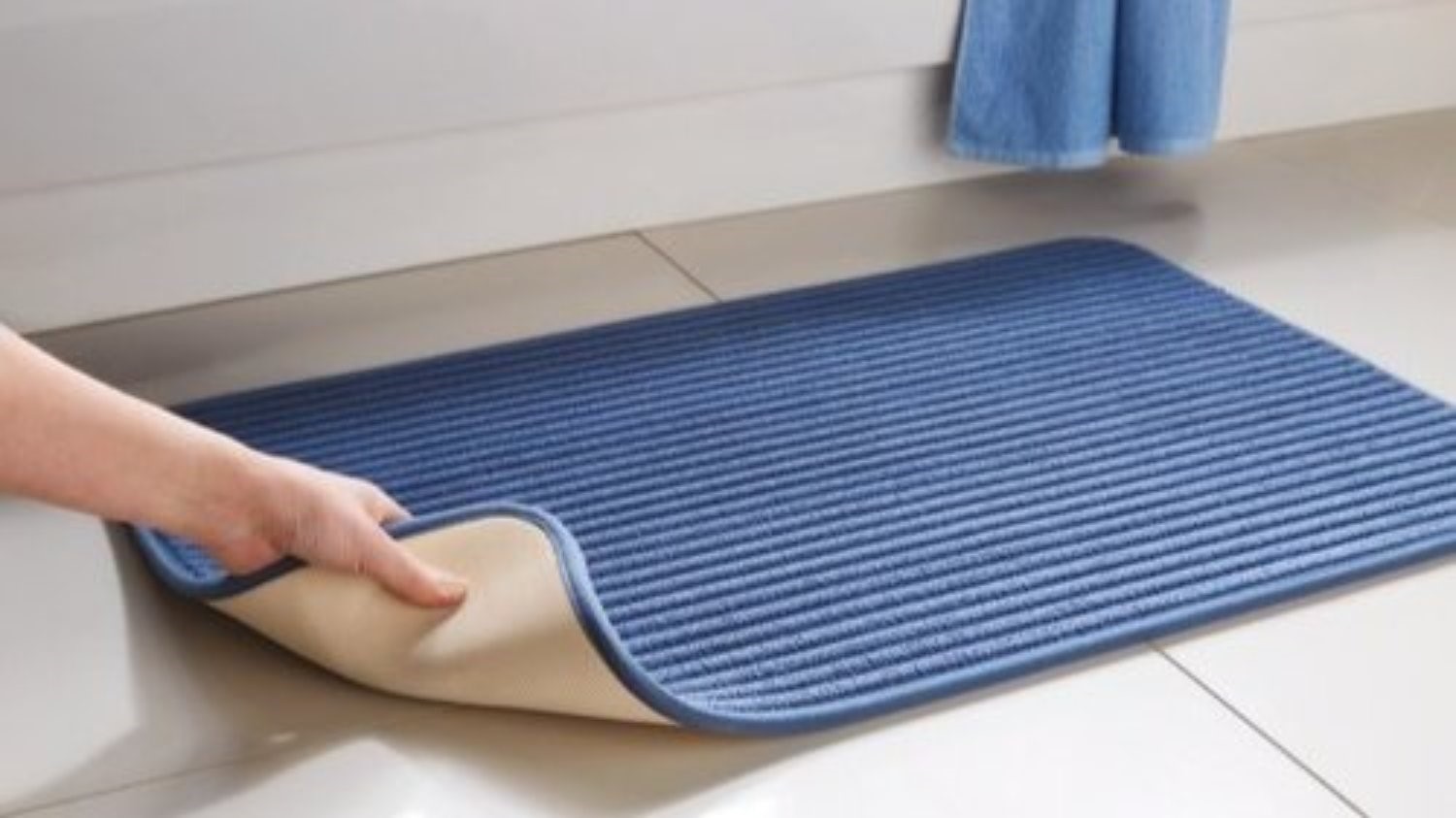
- Use a non-slip bath mat when stepping in/out of shower/tub and remove it when not in use.
- Prevent slips in the shower/tub by using a non-slip rubber mat or non-slip treads to step onto.
- All safety equipment such as bath chair, grab bars, commode/raised toilet seats should be secure and in good condition.
- Do not lock the bathroom door.
- Bring a phone or medical alert system to the bathroom.
Should I Give My Client a Shower?
As a PSW, before you begin preparing your client for a shower, consider the following:
Does client’s care plan indicate shower or sponge bath?
Do not shower a client who can only receive a sponge bath. If a client refuses a scheduled shower, offer a sponge bath instead.
Can client safely transfer in and out of the shower?
If a client feels weak, has increased pain, or is not capable of the transfer, do not shower the client; offer a sponge bath instead.
Does my client’s shower have all the necessary safety equipment?
Always check to ensure safety equipment is set up for use, and not broken/damaged. If no safety equipment is available, provide a sponge bath instead and notify your CSS.
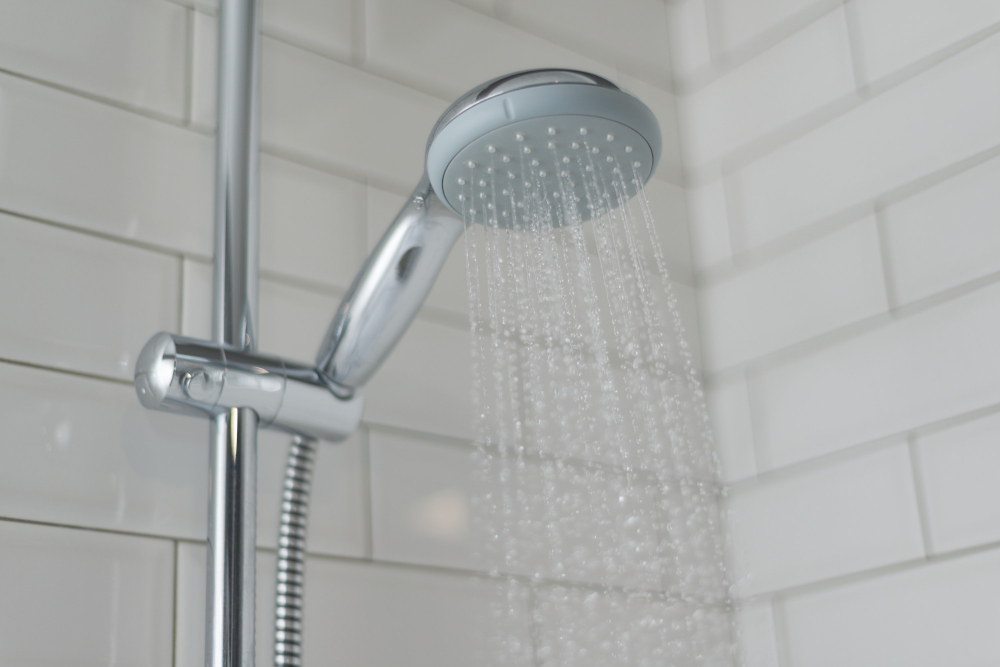
Handheld Shower
Bath/Shower Chair
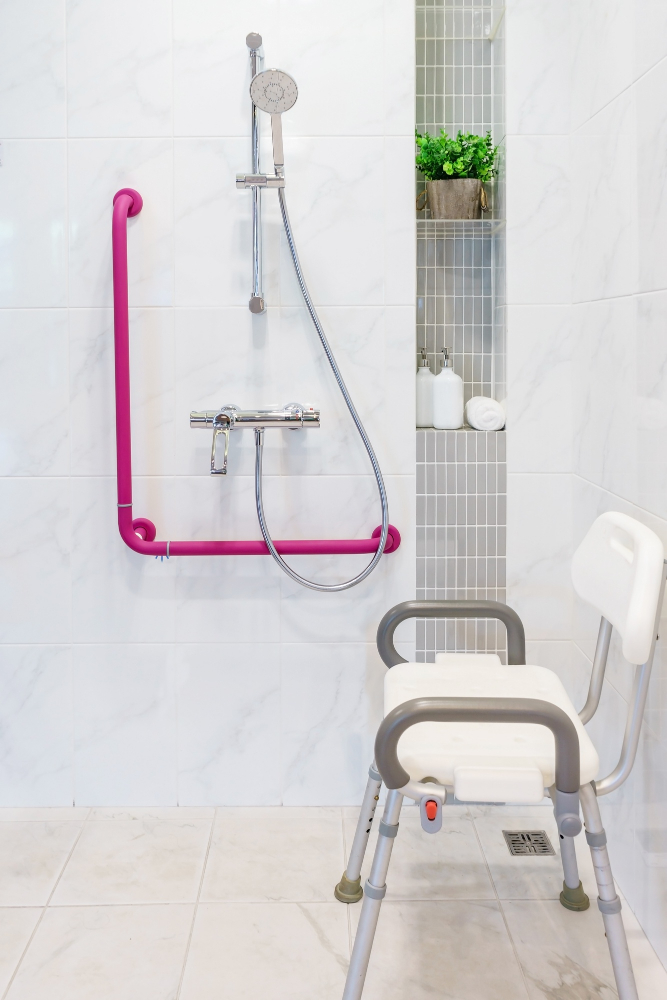
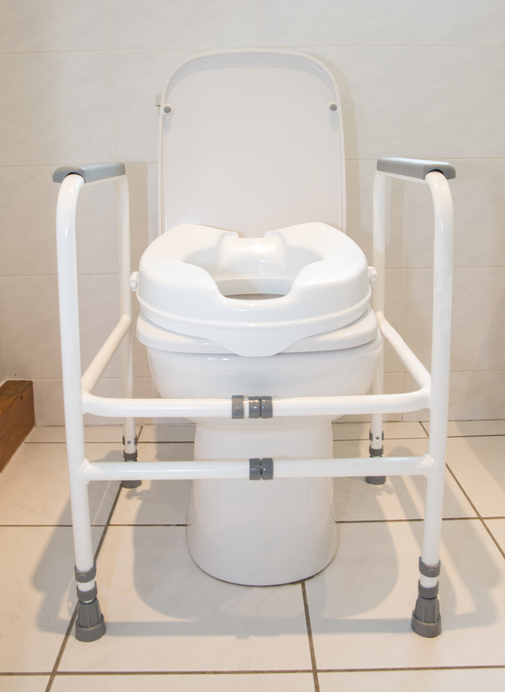
Raised Toilet Seat
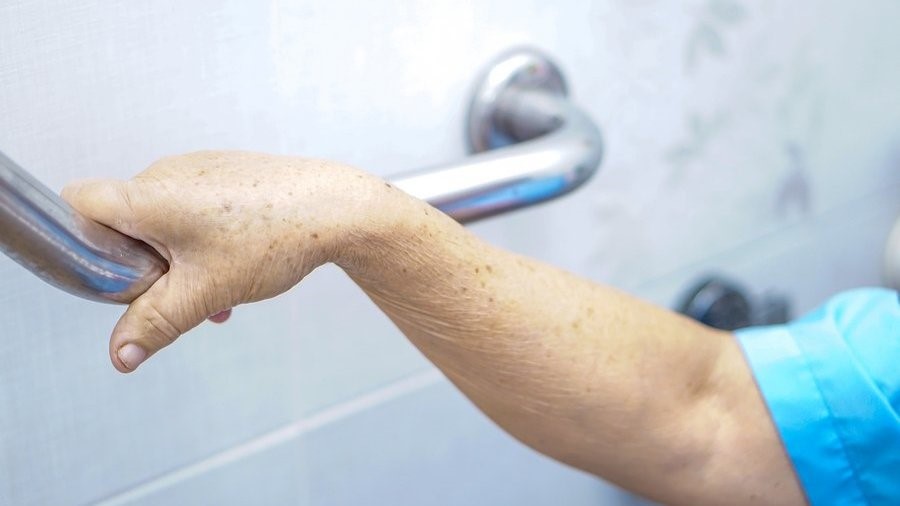
Grab Bars
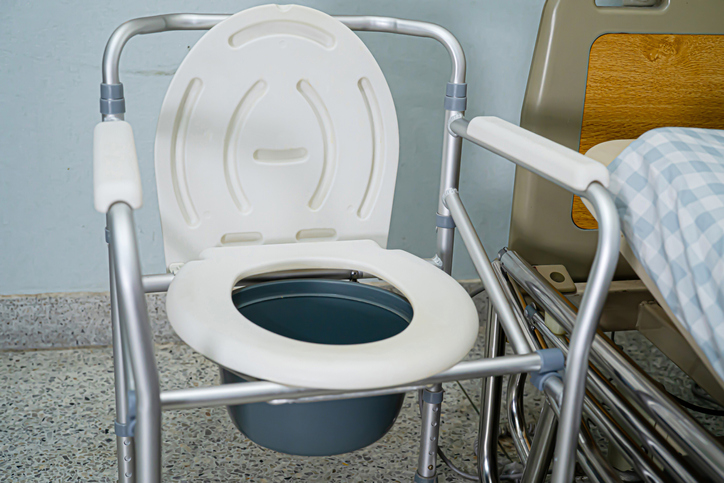
Commode
Non-Slip Mat (Inside Tub)
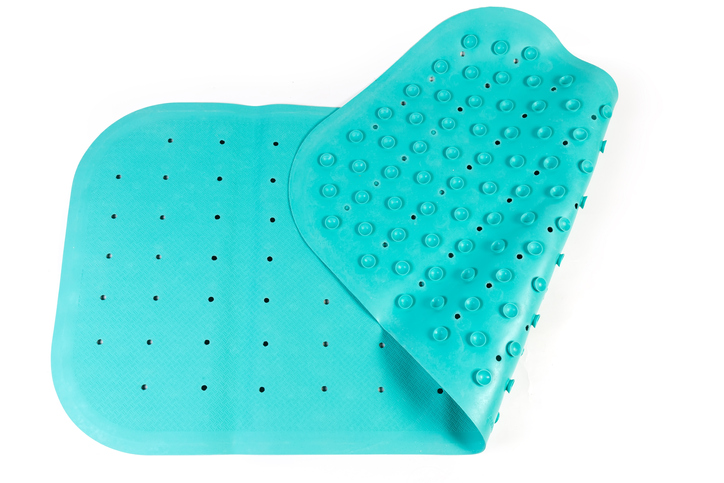
Non-Slip Mat (Outside Tub)
The client may not have all the required safety equipment due to different factors (such as financial constraints). Connect with your CSS to see if any alternatives can be arranged.
Length of a Shower
PSWs often ask how long a shower should take. They should know the following:
- No standard length of time for a shower
- Work within client’s physical capabilities
- Do not rush client or force client to move faster than they are able
- Be prepared to provide a clear explanation to clients/families if they make requests that poses a safety risk to PSW and/or client
Speak to your CSS if:
- Showers take longer than the scheduled time for the visit
- Client chooses to stay in the shower for an unusual length of time
- PSW has safety concerns
Water & Bathroom Temperature
The temperature of the water:
- Cannot measure exact temperature of water.
- PSW should do test how hot or cold the water is by running the water over the back of their hand.
- Cognitive clients can tell PSW if the water is too hot or too cold.
- Clients generally like warmer temperatures of water.
The overall temperature of the room:
- If the bathroom gets too hot during the shower, the bathroom door or window should be left opened to promote air circulation.
- PSW should explain to client the need for ventilation in the bathroom.
- If challenges are encountered PSW should address those with their CSS.
Reporting to Your Supervisor
Circle of Care’s risk policies require all PSWs & Homemakers to report concerns and/or incidents to the Call Centre (416-635-2860) with the same day of occurrence.
Office staff documents your report and it is escalated to the CSS for follow-up. Here are some examples of situations that can lead to an unsafe incident in the bathroom, these should be reported in a timely manner:
- Damaged or unsafe equipment.
- When no safety equipment is available for use in client’s bathroom.
- Client’s refusal to allow PSW to open a door/window in bathroom to promote ventilation.
- If client is slow moving and shower along with other tasks cannot be completed within the allotted time.
- Client is experiencing a change/decline in overall health status or is showing signs of increased difficulty with transferring in/out of shower.
Video
References
Canada, P. (2014, April 10). Senior’s falls in Canada: Second report. Government of Canada. https://www.canada.ca/en/public-health/services/health-promotion/aging-seniors/publications/publications-general-public/seniors-falls-canada-second-report.html
Centers for Disease Control and Prevention (2017). Check for safety: A home fall prevention checklist for older adults. https://www.cdc.gov/steadi/pdf/STEADI-Brochure-CheckForSafety-508.pdf
Home and Community Care Support Services (2017). Falls safety and prevention in the bathroom.
http://healthcareathome.ca/nsm/en/Getting-Care/Patient-and-Caregiver-Resources/safe-at-home/falls-safety-prevention
Nova Scotia Health Authority (2008). Biannual nursing environmental checklist. https://policy.nshealth.ca/site_published/dha7/document_render.aspx?documentRender.IdType=5&documentRender.Id=24452
Potter, P., Perry, A. G., Stockert, P., Hall, A. (2019). Canadian fundamentals of nursing (6th ed,. Astle, B. J., & Duggleby, W. Eds.). Elsevier Canada.
Public Health Agency of Canada. (2016, April 28). The safe living guide – A guide to home safety for seniors. https://www.canada.ca/en/public-health/services/health-promotion/aging-seniors/publications/publications-general-public/safe-living-guide-a-guide-home-safety-seniors/keeping-your-home-safe.html
Public Health Agency of Canada. (2016, April 28). You can prevent falls.
https://www.canada.ca/en/public-health/services/health-promotion/aging-seniors/publications/publications-general-public/you-prevent-falls.html
Sinha, S. (2022, May 19) Practical technologies that can enable ageing in place. Fall Presentation Resources\Practical+Technologies+That+Can+Enable+Ageing+in+Place+-+Slides _May 2022.pdf