WHMIS

WHMIS is an acronym for Workplace Hazardous Materials Information System and is designed to provide Employers and workers with health and safety information about hazardous materials (such as chemicals) that are being used in the workplace. Each time that you work with a chemical, you need to know how to read the label to identify safety risks and precautions associated with that particular chemical.

These are the major components of WHMIS/GHS, which all employees must become familiar with:

  1. Classification of hazardous products labels (understanding information contained on a workplace and supplier label);
  2. SDS: Safety Data Sheets
  3. Worker Education (this includes both our training to workers at their orientation session and through ongoing health & safety information sessions).
Hazard Awareness and Identification Policy

GHS

GHS is an acronym for Globally Harmonized System of Classification. It is the system that standardizes product information among countries, and was developed by the UN to provide consistent hazard information among all countries, facilitate safe transport, handling and use of chemicals, and facilitate trade and ease compliance between countries. With changes to Hazardous Product Act in 2014, Health Canada and other government agencies have incorporated GHS requirements into the WHMIS legislation

What are Hazards?

A hazard is a potential for harm, damage or adverse health effects on someone or something.
Hazardous materials can be solids, liquids, or gasses that could result in harm to property, people, or the environment.

WHMIS used to have different Canadian legislation for different types of products. Now with GHS, there is one system to cover all types of hazardous materials. All hazardous products in the workplace should be treated the same.

It is important to know what types of materials you are working with on a regular basis. The following steps should be taken when working with materials:

  • Read labels, hazard symbols, and safety information
  • Follow indicated precautions. If you are not sure about how to use a product safely, seek information or ask your Supervisor

Labels

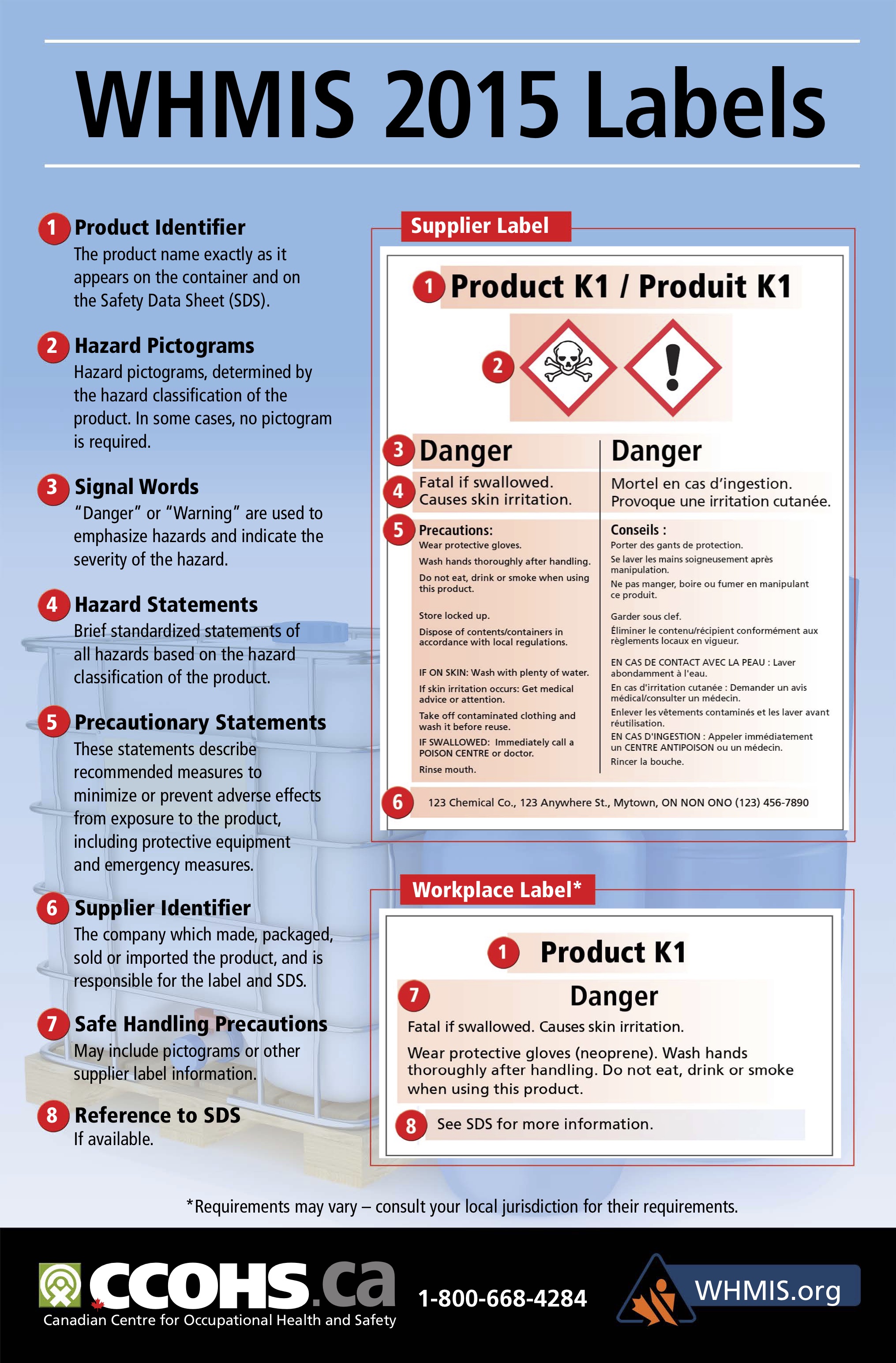
WHMIS Labels are found on products to identify the hazardous material and to let users know what precautionary or safe handling measures should be taken.

There are 2 main types of WHMIS Labels:

  1. Supplier labels: these are provided by the suppliers of the product and are found on the back of the container
  2. Workplace labels: these are required when a hazardous product is made at the workplace, and used within the workplace. These types of labels are also required when pouring a product from one large container into another container. These labels are also required when the original supplier label becomes lost or unavailable, or when more that one person is in control of the product.

Employers are responsible for making sure hazardous products are properly labelled, and for preparing and applying the workplace label when approapriate. Employees are responsible for always reading these labels, and following precautionary measures.

You can click the button below to see a PDF version of the element labels.

Label Elements PDF

GHS Hazard Pictograms and Classification

WHMIS hazardous materials are classified into groups based on chemical materials with similar properties and hazards. Each class has a distinct symbol, characteristics, what precautions to take, and if it might be a health hazard.  Understanding the types of hazards and basic handling precautions is an important first step in protecting your health and safety. Most pictograms have a red square border. Inside of this border, is the symbol that represents the potential hazard.

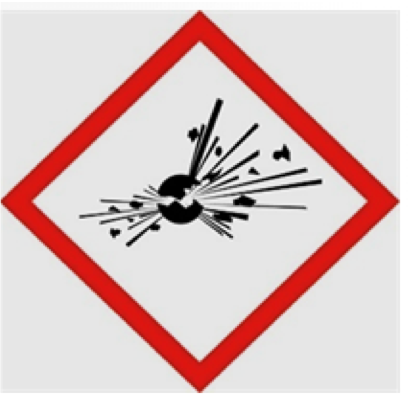
Exploding Bomb (Explosive)

This symbol addresses products that can be self-reactive and may catch fire or become explosive if not handled in proper conditions. These products should only be handled by trained professionals. Products that feature this graphic may be sensitive to temperature or light changes as heat could cause it to explode or catch fire.

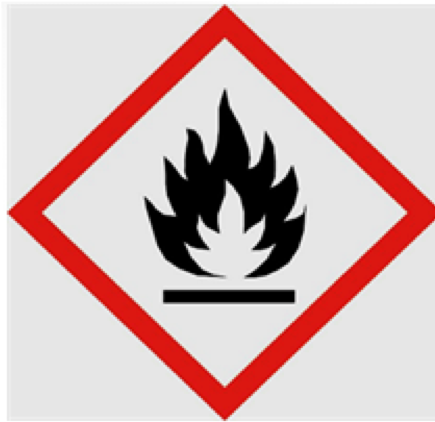
Flame (Flammable)

Products with this label can easily ignite and burn rapidly. A fire requires a fuel source, oxygen and heat in order to burn. When handling products with this label, it’s important to make sure that the three elements are not present together to minimize the risk of ignition. The main hazards are fire or explosion. Liquids or solids that are packaged in a receptacle, and pressurized with a gas in a specific gauge, can be flammable.

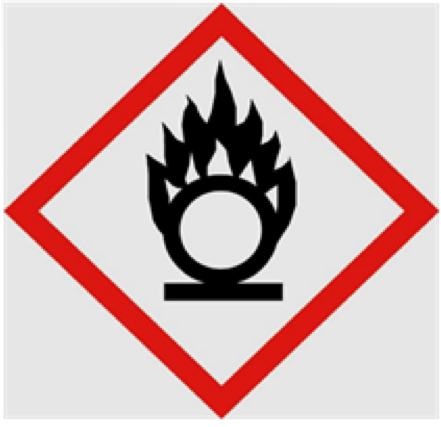
Flame Over Circle (Oxidizing)

Products that have this label are oxidizers, and are a significant fire hazard if not handled properly. Oxidizers give off oxygen, or other oxidizing substances, and therefore greatly increase the risk of fire or explosion. Oxidizing substances can create a more intense fire, cause substances that wouldn’t normally burn to burn rapidly, or cause some combustible materials to burn spontaneously without the presence of a flame.

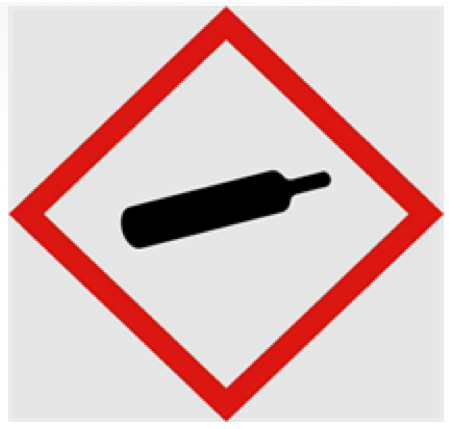
Gas Cylinder (Gases Under Pressure)

Products with this label contain gases that are stored under pressure in cylinders. These products may carry other health hazards, such as being toxic, flammable, corrosive, etc. Compressed gas containers, if punctured, can become unpredictable and dangerous – often rocketing around the room. Frostbite is also a concern with gases under pressure, as the container can become very cold as the gases escape. The cylinder or container may explode if heated. Refrigerated liquefied gasses are very cold, and can cause severe cold burns.

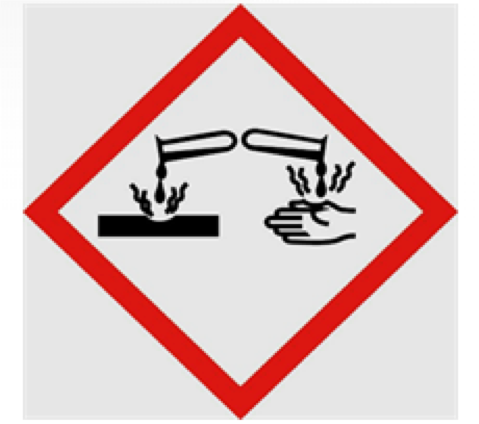
Corrosion

Any product that can chemically damage or destroy steel or aluminum is considered corrosive to metals. Products with this label may be corrosive to metals or skin. Damage can cause skin/eye irritation (which can be a reversible damaged), but can also cause destructive and irreversible damage. Therefore, extra caution is to be taken when handling these substances.

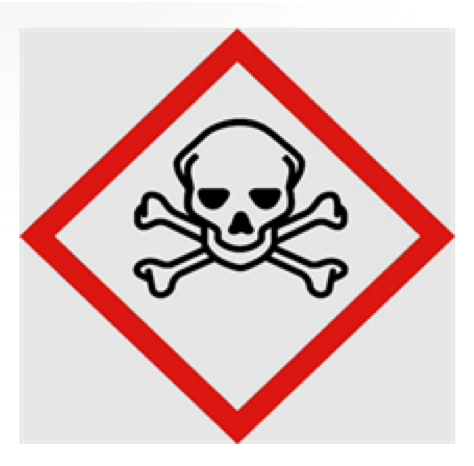
Skull & Crossbones (Acute Toxicity)

Products that dawn this label are fatal, toxic or harmful if inhaled, swallowed or put into contact with skin. Acute toxicity refers to effects that occur after a single dose, or multiple doses given within 24 hours. While the toxicity of a substance can’t change, the risks associated with exposure can be minimized through proper handling. Acute Toxicity can result from exposure to the product. It can also result from a product that releases a gaseous substance upon contact with the water.

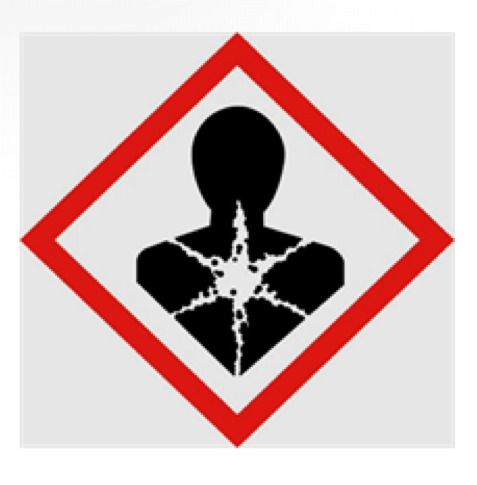
Health Hazard

This label is used for products that cause short-term and long-term chronic health effects and those with targeted health effects. Chronic health effects occur from long term exposure to a product. This hazard can cause substantial negative health effects, such as damage to organs, and heritable gene mutations (which can be passed on to future generations). In comparison, this hazard can also cause minor health effects such as respiratory irritation, drowsiness or dizziness.

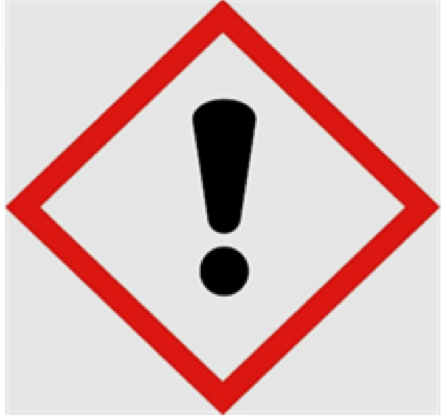
Exclamation Mark (Health Hazards)

This label is used to identify products that may cause less severe health hazards, such as skin and eye irritation. The effects are generally reversible and can be minimized with the proper medical treatment. Things like redness, coughing, inflammation, or itching would fall under this category.

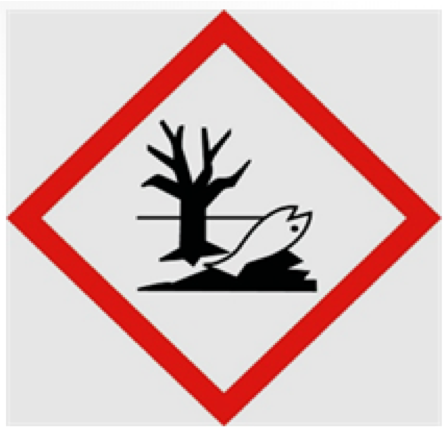
Hazards To The Environment

Products with this label can have a negative impact on the aquatic environment. This label is not mandatory, but many suppliers will choose to indicate these hazards on their Labels and Safety Data Sheets (SDS). Aquatic hazards include both short-term and long-term toxic impacts to aquatic life due to exposure.

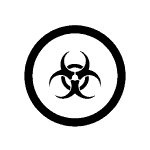
Biohazardous Infectious Materials

Products with this label have micro-organisms, nucleic acids or proteins, that can cause diseases in either animals or humans. Bacteria, viruses, fungi and parasites are all included in this category.

Safety Data Sheets (SDS)

The manufacturer and/or supplier will provide a Safety Data Sheet to the Employer, who in turn will make it available to their employees. The SDS are summary documents that provide more detailed information on the nature and properties of a hazardous material that can be included on a label and advice about safety precautions. SDS tell us what the hazards are, how to use the product safely, what to expect if the recommendations are not followed, how to recognize symptoms of exposure, and what to do should an emergency occur. SDSs are written by the manufacturer and/or supplier of the product. In the case where the product is produced, and used exclusively in the workplace, then the Employer will write the SDS.

The information included on an SDS includes the following:

  • Identification – product name, product synonyms, recommended uses, restrictions, supplier information (name, address, phone number, emergency contact).
  • Hazards Identification – hazard classification, pictogram/name, signal word, hazard statement, precautionary statement, and other hazards which do not result in classification (e.g. molten metal hazard).
  • Composition/Ingredients – material or substance: chemical name(s) and synonyms, chemical abstract services (CAS) registry number and unique identifiers, impurities, stabilizing solvents and/or additives.
  • First-Aid Measures – for inhalation, skin contact, eye contact, ingestion, acute or delayed symptoms, immediate medical attention and specialized treatment, if necessary.
  • Fire-Fighting Measure – suitable/unsuitable fire extinguishers, specific hazard from the hazardous product, protective equipment/precautions for firefighters.
  • Accidental Release Measure – personal precautions, protective equipment, emergency procedures, environmental precautions, methods and materials for containment and clean-up.
  • Handling & Storage – safe handling and storage precautions, including incompatible materials.
  • Exposure Controls/Personal Protection – control parameters, including occupational exposure guidelines/limits or biological exposure limits and the source of those values, engineering controls, individual protection measures, personal protective equipment (PPE), protection for eyes/face, skin, respiratory, general hygiene.
  • Physical & Chemical Properties – physical state, colour, odor, pH, vapour pressure, flammability, solubility, melting point, boiling point (or initial boiling point and boiling point range), freezing point, lower/upper flammable or explosive limit, flash point, density and relative density, particle characteristics, auto-ignition temperature, decomposition temperature.
  • Stability & Reactivity – reactivity, chemical stability, possible reactions, conditions to avoid, incompatible materials, hazardous decomposition products.
  • Toxicological Info – routes of exposure, symptoms, acute toxicity e.g. LD 50, skin/eyes effects, aspiration hazard, specific target organ toxicity, respiratory/skin sensitization, carcinogenicity, reproductive toxicity, delayed and immediate effects, and chronic effects from short-term and long-term exposure, numerical measures of toxicity including acute toxicity estimates (ATEs).
  • Ecological Info – ecotoxicity, persistence and degradability, bioaccumulation potential, mobility in soil, other adverse effects.
  • Disposal Considerations – residues, safe handling, disposal methods, information on safe handling for disposal methods, including any contaminated packaging.
  • Transport Info – UN numbers/shipping name, transport hazard classes, packing group, environmental hazards, special precautions.
  • Regulatory Info – national/provincial health, safety or environmental regulations specific to the product.
  • Other Info: date of the latest revision on the SDS.

Before using, handling or storing a hazardous material for the first time, always follow these steps:

  1. READ the SDS;
  2. Make sure you UNDERSTAND what the potential hazards are;
  3. KNOW the measures you need to take in the case of an emergency.

Consumer Product Identification Labels & Symbols

Products that are generally sold for personal use in households are considered to be classified as Consumer Products. Consumer Products are popular in the workplace due to their availability at retail stores. In order for a material to be packaged as a Consumer Product it must be:

  • In a container or package that is offered for sale and is normally displayed to the public.
  • Available to the general public through regular retail stores, e.g., Windex, bleach, cleansers, or floor polishes sold at mass retailers (i.e. Canadian Tire, Walmart)

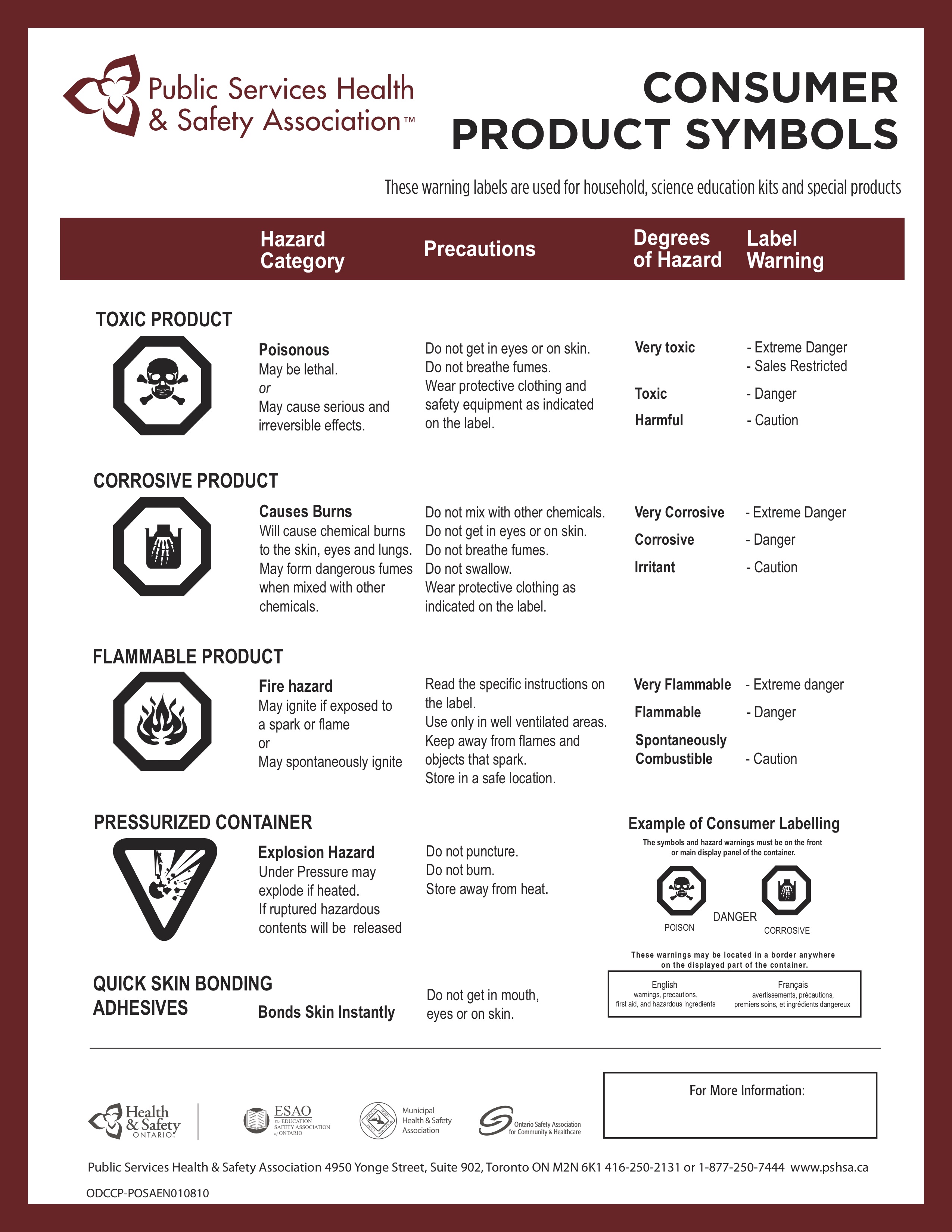
Consumer Products have their own unique symbol identification system. Products are grouped according to specific “hazard categories.” Each group of hazards, with the exception of Quick Skin-Bonding Adhesives (i.e. Krazy Glue); have been assigned specific symbols enclosed in a defined border that are intentionally different from those used as WHMIS identifiers.

Consumer Hazard Borders

Warning: Special hazard/special requirements

Danger: Severe hazard or immediate harm

Caution: Moderate hazard/long-term or hidden harm

Consumer Hazard Symbols

Consumer products are divided into FIVE hazard categories based on the type of hazard.
You can click the button below to view a PDF explaining all of the consumer hazard Symbols.

Consumer Symbols

CAUTION means the injury will most likely be temporary, but death may occur with extreme exposure.
DANGER means the products may cause temporary or permanent injury or death.
EXTREME DANGER means exposure with even small amounts of the product may cause temporary or permanent injury or death.

Protection from Chemicals

Using chemicals presents a certain risk because they can enter the body in various ways. The most common routes of entry into the body include:

  • Absorption: Through the skin, mucous membranes or eyes.
  • Inhalation: Through the nose. This is the main entry for most chemical exposures.
  • Ingestion: Swallowed when consuming food or a beverage.
  • Injection: Enters the body through punctures from a needle, lancet or other sharp objects.

General Safety Points to Remember when Using Chemicals

  • Never mix any two cleaning products/solvents together or add bleach. The gas, which is released, can cause dangerous fumes.
  • Do not use any cleaning products unless you know exactly what it is and unless it is in an appropriately labeled container.
  • Use cleaning fluids with adequate ventilation (e.g., open window).
  • Protect your skin and eyes using personal protective equipment when using cleaning agents, solvents and oven cleaners.
  • Do not throw chemicals, batteries or waste into a fireplace.

The best means of ensuring full protection is to always:

  • READ the label for the safe handling instructions;
  • FOLLOW the safety precautions using the correct safety equipment (i.e. gloves);
  • WASH your hands after using a chemical.