

Client Safety is the most important thing at Circle of Care. Click the links below to review our policies on client safety reporting and disclosure.
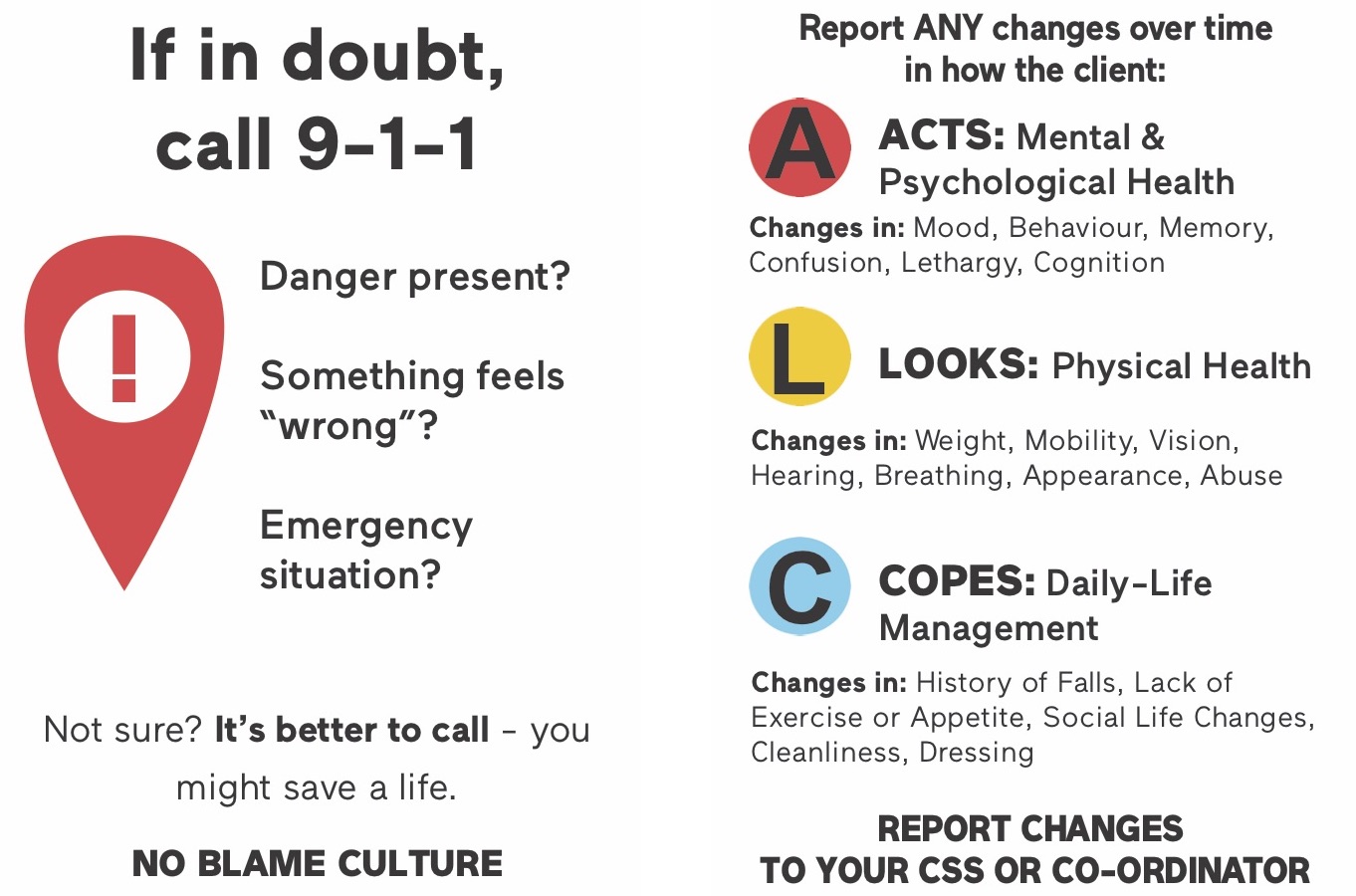
The ALC Checklist
Changes are part of the normal aging process, however a decrease in vision, hearing, sense of smell and touch and cognitive functioning can increase a client’s risk of injury. Personal Support Workers and Homemakers have a very important role to play in keeping clients safe at home. Use the ALC Checklist to identify noticeable changes in your client.
Acts – including behaviour, cognition, mood
Looks – including appearance, physical deterioration, abuse
Copes – including dressing, eating, cleaning
If you see any changes in your clients please report them immediately to your Service Coordinator and Supervisor. Reporting client information is a very important part of your job. You are responsible for reporting information on your client’s functioning, including their physical, mental and social state as well as any changes in the client’s condition.
Physical Changes
- Sudden change in weight
- Change in appetite
- Change in energy level (either lethargy or agitation)
- Change in sleep pattern
- Difficulty managing tasks that were previously managed, such as dressing and other day-to-day activities
- Changes in sight or hearing
- Changes in speech patterns (talking more or less, or not making sense)
- Bowel/bladder changes
- Skin changes such as sores, rashes, red spots, bruises
- Changes in ability to walk or get around
- Changes in physical stability
Mental Changes
- Memory loss or confusion
- Inability to recognize familiar faces
- Unable to follow simple instructions
- Unusual mood changes (sad, depressed or angry)
Social Changes
- Changes in family supports
- Death of a close friend or family member
- Refusal to attend activities that were previously attended on a regular basis (Remember to ask the client his/her reasons for refusing to attend before becoming concerned)
- Suddenly becomes suspicious or distrusting
Economic/Financial Changes
- Inability or unwillingness to pay for essentials such as groceries, bills, etc.
Emergency Procedures
When an emergency occurs it is important that you be prepared. Emergencies can include a client falling, sudden illness, a fire, a poisoning or an accident.
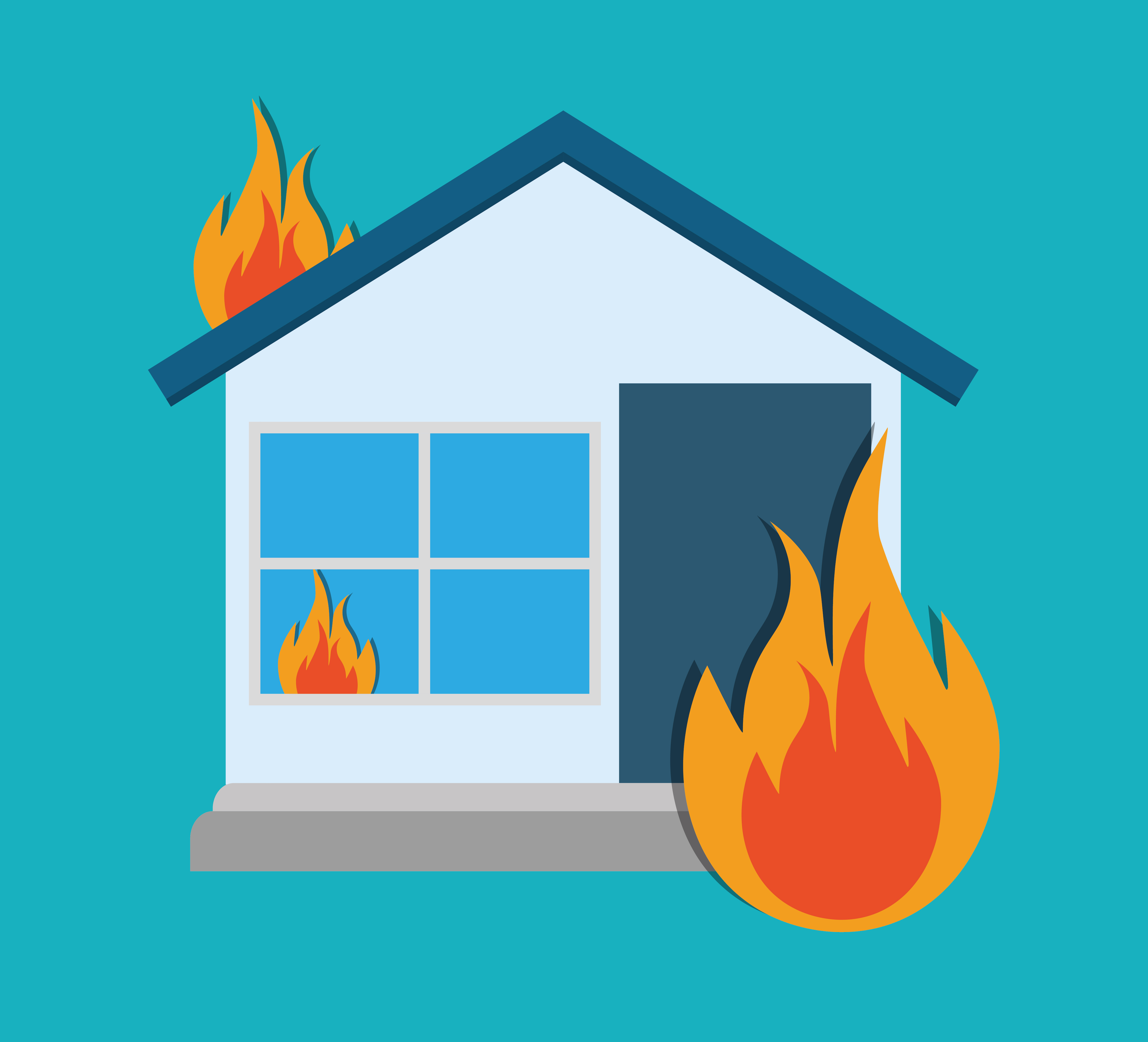
In the case of fire:
- If a small fire cannot be doused within a few seconds with baking soda, a fire extinguisher or a pot lid, leave the client’s home with the client and call 911 from outside the home. Speak clearly and calmly.
- If you are unable to move the client out of the dangerous situation, leave immediately and call 911 from the nearest telephone. Indicate that the client needs to be removed from the scene with help.
- In all cases, wait for help to arrive and report the incident to the Call Center as soon as possible.
- To cool a burn, use cool running water. Immediate cooling helps limit skin damage.
- If your clothes catch on fire Stop, Drop and Roll. Rolling will help to smother the flames.
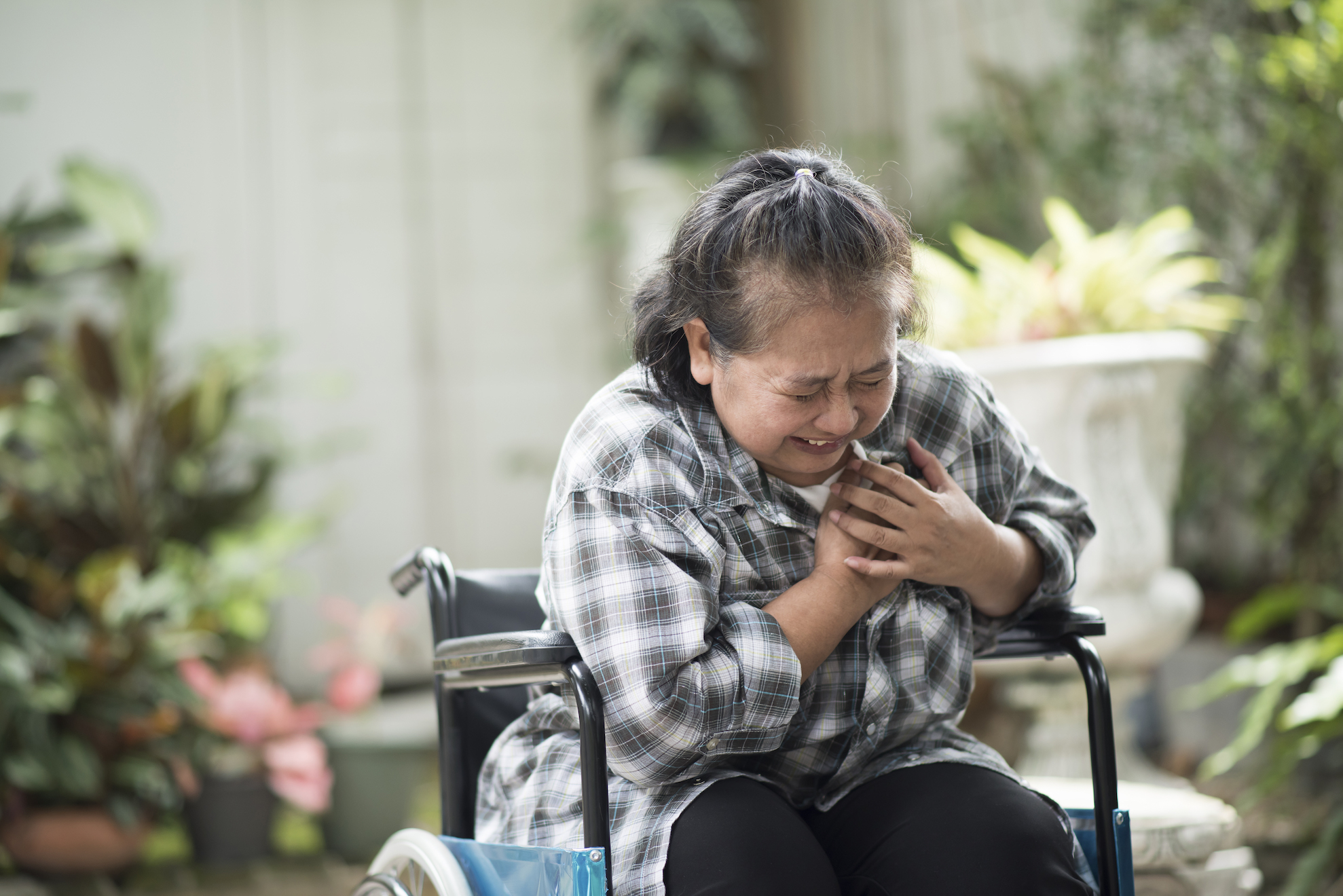
In the case of sudden client illness:
- In an emergency situation (e.g. choking, unconsciousness) dial 911 and report the situation immediately.
- Do not move a suddenly ill or unconscious client. Keep him/her warm and as comfortable as possible until help arrives.
- Wait for the help to arrive and then call the Call Centre as soon as possible.
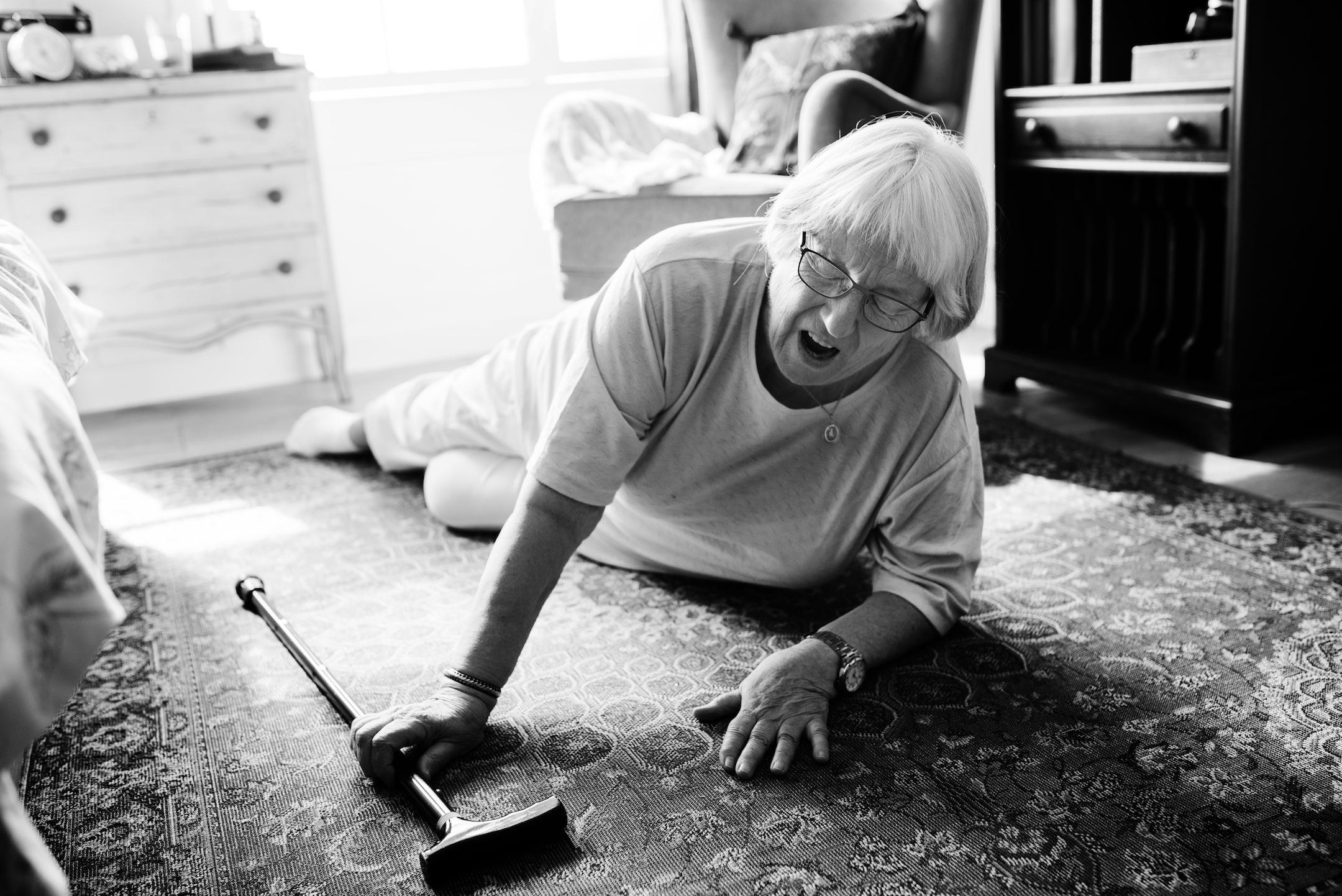
In the case of a client falling:
- Do not move a client who is unable to get up by him/herself after a fall.
- Call 911 and report the accident.
- Keep the client calm, comfortable and warm until help arrives.
- Call the Call Centre to report the incident as soon as possible.
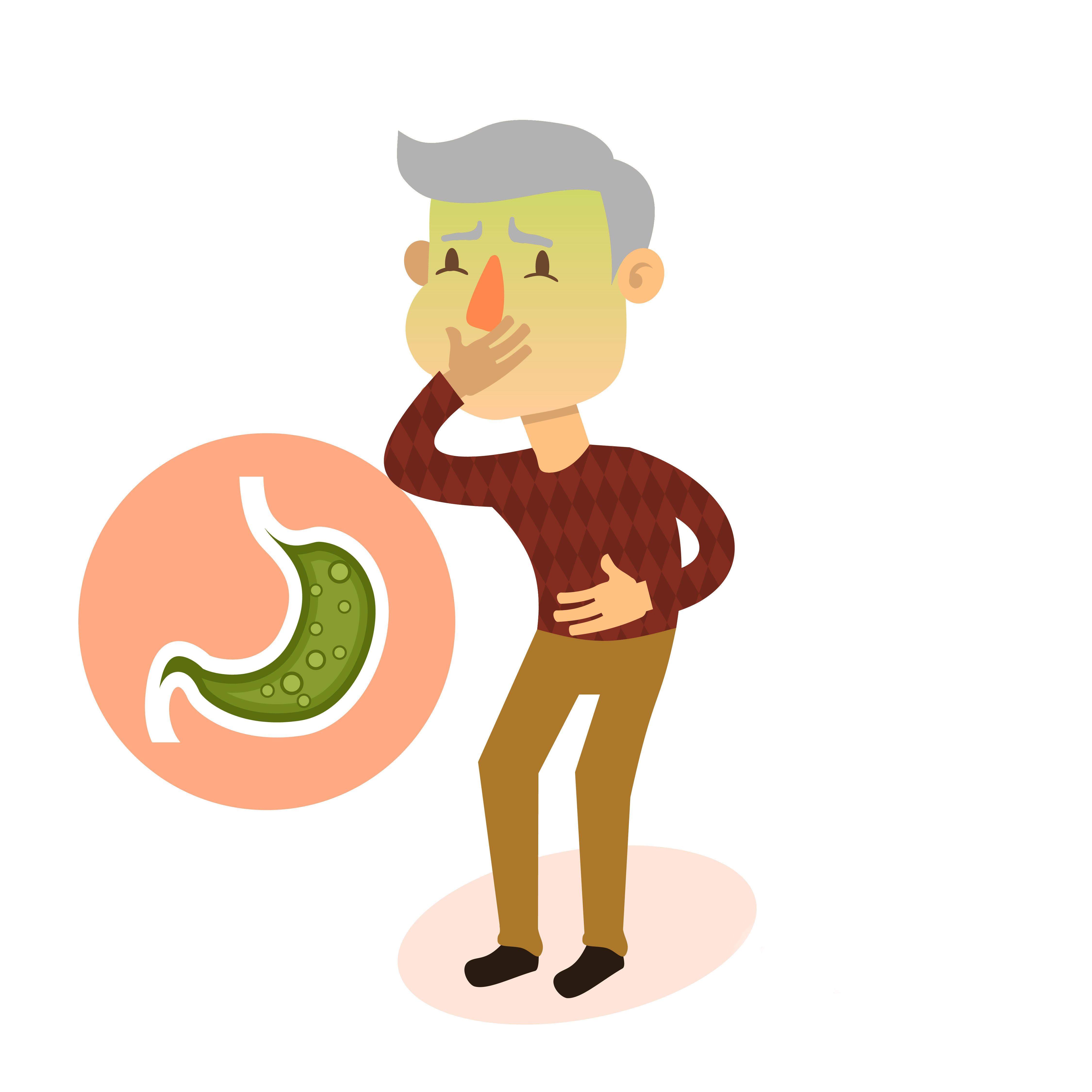
In case of suspected poisoning:
- Call 911, or, if the client is in no distress but has taken a poisonous substance, call the Poison Information Centre (416- 813-5900).
- Keep the bottle so that the medical attendants know how to treat the client.
Until Help arrives:
- While waiting for help to arrive, open the door of the residence to facilitate easy sighting and entry of the emergency personnel.
- If there is any other person available:
- Ask them to send the elevator of the apartment building to the lobby so that it will be there when help arrives.
- In a private home, they could watch for and direct the emergency personnel to the right location.
Falls Prevention
We have put together a whole page about preventing falls. You can learn more by clicking the button below.
Client Abuse
Defining Elder Abuse
 Elder Abuse is “a single or repeated act, or lack of appropriate action, occurring in any relationship where there is an expectation of trust that causes harm or distress to an older person.” (WHO, 2016) The abuser can be a spouse, child, family member, or a person of trust.
Types of Elder Abuse
There are 5 types of elder abuse:
Physical Abuse:
- Pushing or shoving
- Hitting, slapping or kicking
- Pinching or punching
- Restraining by tying down or locking in a room
- Any behaviour intended to exert force or physical harm without consent
Emotional Abuse:
- Threats, put downs, name calling or insults
- Bullying: intimidation or humiliation (including on the Internet)
- Controlling or keeping someone from seeing friends or family
Sexual Abuse:
- sexual touching or sexual activity without consent
- continued sexual contact when asked to stop
- forcing someone to commit unsafe or humiliating sexual acts
Financial Abuse:
- Lending or giving away money, property or possessions
- Making or changing your will or power of attorney against your wishes
- Signing legal or financial documents that you don’t understand
Neglect:
- Active (intentional) neglect: the deliberate withholding of care or the basic necessities of life to an older adult for whom they are caring
- Passive (unintentional) neglect: the failure to provide proper care to an older adult due to lack of knowledge, experience /ability or unaware of how to access local resources
Elder Abuse Legislation
Retirement Homes Act, 2010 (Act):
- Retirement homes are now regulated and must follow a law called the Retirement Homes Act, 2010 (Act).
- The Act sets out a Residents’ Bill of Rights.
- The RHRA responds to calls about harm or risk of harm to retirement home residents resulting from certain events. These events include abuse, neglect, improper care or treatment, unlawful conduct and misuse of a resident’s money 3
Long-Term Care Homes Act, 2007
- The fundamental principle is that a long-term care home is primarily the home of its residents and is to be operated so that it is a place where they may live with dignity and in security, safety and comfort (2007, c. 8, s. 1)4
Currently, there is no mandatory reporting of elder abuse in the community in Ontario.
Risk Factors for Elder Abuse
- History of Physical Violence
- Increased Vulnerability and Diminished Capacity to Make Decisions
- Social Isolation
- Unequal Balance of Power
- Isolated and Overwhelmed Caregiver
Possible Signs of Elder Abuse
- Sudden changes in behaviour.
- Unkempt appearance
- Excessive anger or agitation
- Low mood or depression
- Decrease in social activities
- Lack of interest in things previously enjoyed
- Withdrawn
- Apathy
- Isolation
- Unexplained change in standard of living
- Lack of resources (food, money, shelter)
- Change in normal behavior
- Fearfulness
- Fear of social interaction
- Avoiding social activities and events
- Anxiety
- Loss of social connections
- Unexplained Injuries
- Bruises
- Cuts
- Scrapes
- Broken bones
- Falls
How To Respond If You Suspect Elder Abuse
- Remain calm and do not confront the perpetrator
- If you feel comfortable, ask questions
- What happened?
- What triggers this?
- How often?
- Who is involved?
- Let the person know there is help available
- Circle of Care
- Elder Abuse Ontario
- Toronto Police Services
- Toronto Seniors Helpline
- Remember, in an emergency, or when in doubt, call 911
- If you suspect elder abuse, notify your manager or supervisor
Circle of Care’s Elder Abuse Program
- Designed for adults 55+ who have experienced or may be experiencing elder abuse
- Addresses issues arising from past and current abuse
- The program includes individual and group counselling offered in a safe, comfortable and confidential environment by highly-trained and experienced professionals
- We accept self-referrals and referrals from professionals and concerned community members
Some examples of how the program can help are:
- Creating safety plans for older adults who are at risk
- Providing information about financial assistance and community resources
- Accessing emergency accommodations
- Making referrals to other community agencies
- Support groups/individual counselling
- Providing opportunities for support and shared understanding in a safe environment
Helpful Phone Numbers
- Advocacy Centre for the Elderly – 416-863-0511
- Elder Abuse Ontario Senior Safety Line – 1-866-299-1011
- Ontario Works (Financial) – 416-397-9450
- Office of the Public Guardian and Trustee (for mentally incapable persons at risk – 416-314-4422
- St. Elizabeth Geriatric Mobile Crisis Team – 416-498-0043
- Toronto Housing Connections – 416-918-6111
- Toronto Police Services Elder Abuse – 416-808-7040
When in doubt Call 911
If you are ever unsure about a situation, know that you should call 911!
Working With Clients Who Use Oxygen
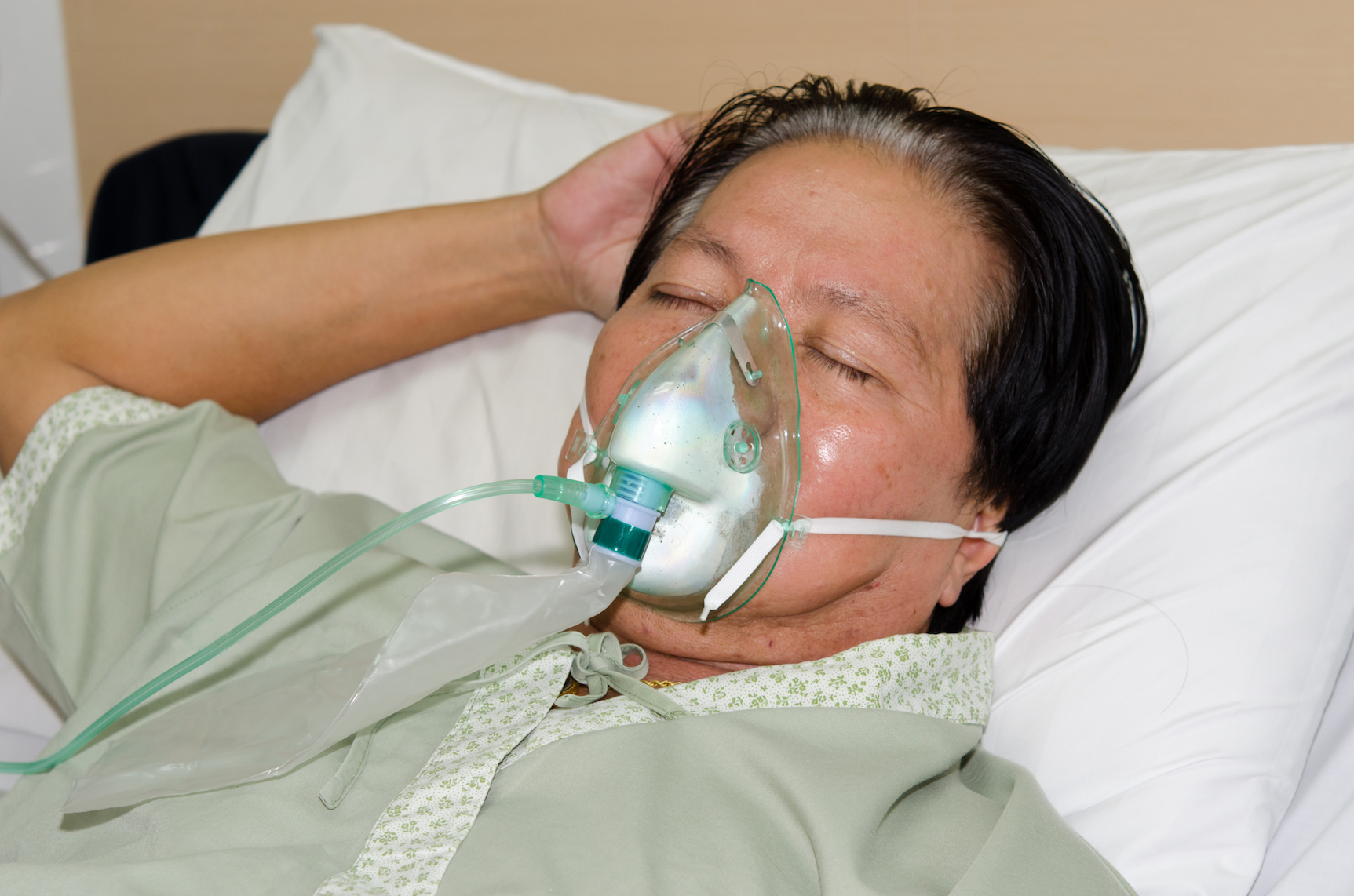
- Make sure that there is never any smoking in the room where the oxygen tank is kept, even if the tank is off. There should be a sign, provided by the oxygen company, posted clearly to indicate that there is oxygen in the home.
- Discuss the importance of removing cigarettes, matches, and ashtrays from the room with the client and family if possible.
- Never use candles or open flames in the room.
- Do not use electrical appliances such as heating pads, or hair dryers near oxygen. Keep the plugs out of the wall while oxygen is running. If a plug is pulled from the wall outlet while the oxygen is running a spark could cause an explosion.
- Do not use oil, grease, Vaseline or petroleum jelly, or large amounts of oily lotions, face cream or hair dressing on patient or equipment. These can catch on fire very easily. Also, do not use alcohol and talcum powder to rub the client while oxygen is running.
- Do not use aerosol sprays near the oxygen while it is running.
- Wet client’s hair before combing it while he/she is receiving oxygen. A spark of static electricity from dry hair can set off an explosion.
- If the client is receiving personal care, assistance with feeding, etc., while on oxygen, do not turn off the oxygen tank. Remove mask and place near-by in case the client needs oxygen suddenly.
- Wool blankets, nylon, and some synthetic fabrics can cause static electricity (an electric spark sent into the air). Remove these from the client’s room. Use cotton items when possible.
IMPORTANT REMINDERS:
- Personal Support Workers are not permitted to check oxygen equipment. The oxygen company should be doing this.
- If you see a client, family member or visitor smoking while oxygen equipment is in the room, ask him/her to put out the cigarette.
- If the client/family member/visitor refuses to cooperate, tell them that you will not be able to remain in the home and call the call center immediately.
Extreme Heat
Know your risks
Hot temperatures can be dangerous, especially if you have:
- breathing difficulties;
- heart problems
- hypertension
- kidney problems
- a mental illness such as depression or dementia
- Parkinson’s disease; or
- if you take medication for any of these conditions
If you are taking medication or have a health condition, ask your doctor or pharmacist if it increases your health risk in the heat and follow their recommendations.
Heat Illness
Heat illnesses include heat stroke, heat exhaustion, heat fainting, heat edema (swelling of hands, feet, and ankles), heat rash and heat cramps (muscle cramps). Heat illnesses can affect you quickly and are mainly caused by over exposure to heat or over exertion in the heat.
Prepare for the heat
Tune in regularly to local weather forecasts and alerts so you know when to take extra care.
Arrange for regular visits by family members, neighbours, or friends during very hot days in case you need assistance. Visitors can help identify signs of heat illness that could be missed over the phone.
If you have an air conditioner, make sure it works properly before the hot weather starts. Otherwise, find an air conditioned spot close by where you can cool off for a few hours during very hot days. This will help you cope with the heat better.
Pay close attention to how you – and those around you – feel
Watch for symptoms of heat illness, which include:
- dizziness or fainting;
- nausea or vomiting;
- headache;
- rapid breathing and heartbeat;
- extreme thirst (dry mouth or sticky saliva); and
- decreased urination with unusually dark yellow urine.
If you experience any of these symptoms during hot weather, immediately move to a cool place and drink liquids. Water is best.
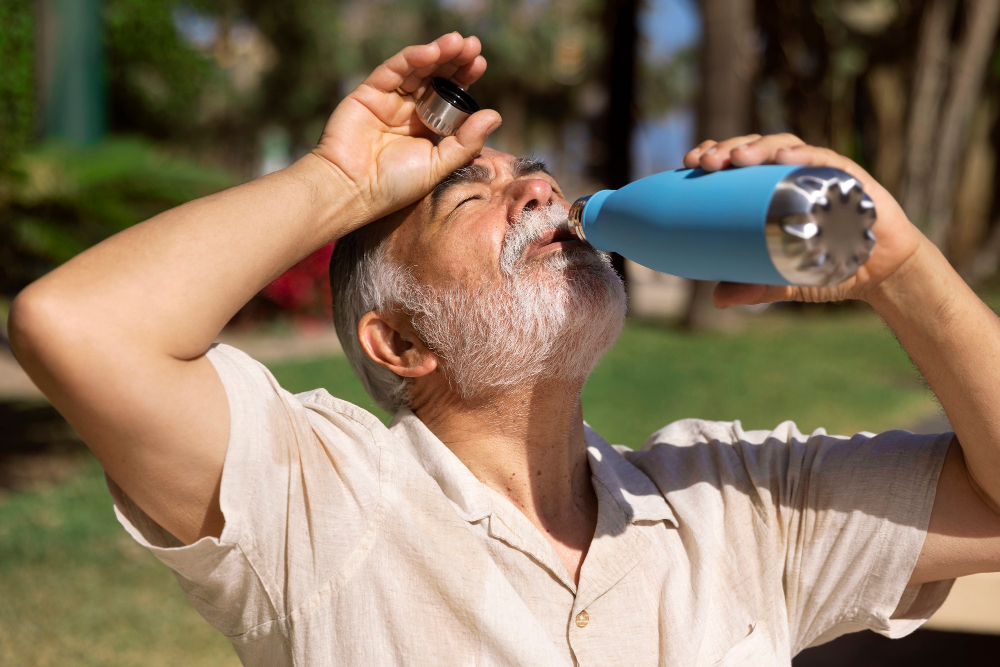
Heat stroke is a medical emergency!
Call 911 or your local emergency number immediately if you are caring for someone, such as a neighbour, who has a high body temperature and is either unconscious, confused or has stopped sweating.
While waiting for help, you can cool the person right away by:
- moving them to a cool place, if you can;
- applying cold water to large areas of the skin or clothing; and
- fanning the person as much as possible.
Stay hydrated
Drink plenty of cool liquids, especially water, before you feel thirsty to decrease your risk of dehydration. Thirst is not a good indicator of dehydration.
- Remind yourself to drink water by leaving a glass by the sink.
- Flavouring water with natural fruit juice may make it more appealing.
- Eat more fruits and vegetables as they have a high water content.
- If you eat less, you may need to drink more water.
Stay Cool
Dress for the weather – wear loose-fitting, light-coloured clothing made from breathable fabric.
Keeping your home cool:
- If you have an air conditioner with a thermostat, keep it set to the highest setting that is comfortable (somewhere between 22 and 26 degrees celsius), which will reduce your energy costs, and provide you with needed relief. If you are using a window air conditioner, cool only one room where you can go for heat relief.
- Prepare meals that don’t need to be cooked in your oven.
- Block the sun by closing awnings, curtains, or blinds during the day.
- If safe, open your windows at night to let cooler air into your home.
If your home is extremely hot:
- Take a break from the heat by spending a few hours in a cool place. It could be a tree-shaded area, swimming facility, or an air conditioned spot such as a shopping mall, grocey store, place of worship, or public library.
- Take cool showers or baths until you feel refreshed. Make sure to use non-slip surfaces in the tub and shower, and wipe up moisture immediately to avoid slipping.
- Use a fan to help you stay cool and aim the air flow in your direction.
Avoid exposure to very hot temperatures when outdoors
Never leave people or pets in your care inside a parked vehicle or in direct sunlight.
- When the outside air temperature is 23 degrees Celsius, the temperature inside a vehicle can be extremely dangerous – more than 50 degrees Celsius!
Reschedule or find alternatives or plan outdoor activities during cooler parts of the day.
- Before heading out, check the Air Quality Health Index (AQHI) in your area if available. Air pollution tends to be at higher levels during very hot days.
- If you are in an area where mosquitoes are active, protect yourself with insect repellent and follow the manufacturer’s directions.
Shade yourself by wearing a wide brimmed, breathable hat or using an umbrella.
- Tree-shaded areas could be as much as 5 degrees cooler than the surrounding area.
- Use a sunscreen that is SPF 15 or higher and follow the manufacturer’s directions. Remember, sunscreen will protect against the sun’s ultraviolet (UV) rays but not from the heat.
- Sunscreen and insect repellents can be safely used together. Apply the sunscreen first, then the insect repellent.