Key Contacts
Circle of Care has an established committee of employees from all departments that 3 times per year to discuss Diversity, Equity and Inclusion (DEI). Our DEI Committee Chair and Senior Management Sponsor also meet every 6 weeks. If you have any questions, concerns or suggestions related to Diversity, Equity and Inclusion at Circle of Care, please reach out to DEI Committee Chair – Kai Van Vugt (ksvirida@circleofcare.com or 647-724-5679).
Diversity, Equity and Inclusion Committee Membership
Update your Language Settings in Dayforce
We have recently updated some settings in our Dayforce software which will now allow employees to update their language preferences. There are currently 5 additional language options in addition to English:
- Spanish
- French
- Filipino
- Slovenian
- Slovencina
To update your language preference, follow these instructions:
- Log into your Dayforce account and go to ‘Profile’
- On the ‘Settings’ tab, click ‘Preferences’
- Select an option in the ‘Culture/Language’ drop down menu
- Click ‘Save’
- Log out to save changes
Supporting Clients: Gender Identity & Sexual Orientation
Quick Guide for Personal Support Workers (PSWs)
Why This Matters
As the older adult population grows, more clients identify as LGBTQ+. Many have experienced stigma or discrimination in healthcare. Your role is essential in creating a safe, respectful, and person-centered environment.
Key Concepts
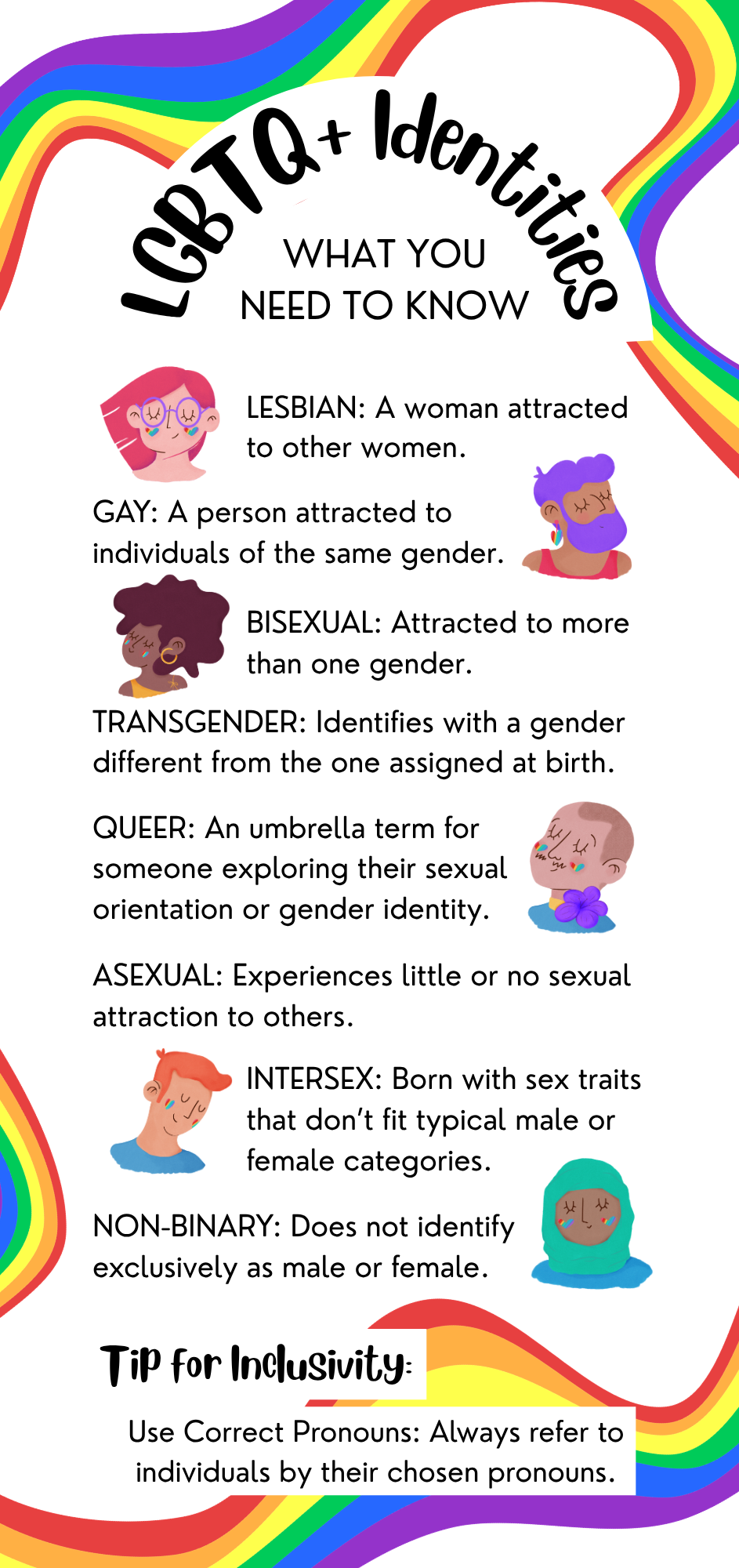
- Sexual Orientation: Who a person is emotionally or romantically attracted to (e.g., lesbian, gay, bisexual, heterosexual).
- Gender Identity: A person’s internal sense of being male, female, both, neither, or something else.
- Pronouns: Words used instead of a name (e.g., she/her, he/him, they/them).
✅ Tip: You don’t need to know everything—respect and openness matter most.
What PSWs Should Do
- Use Respectful Language
- Ask: “What name and pronouns would you like me to use?”
- Use the name and pronouns consistently.
- Avoid assumptions about relationships (“partner” is safer than “husband/wife” unless specified).
- Create a Safe Environment
- Be mindful of tone, body language, and reactions.
- Keep personal information confidential.
- Challenge disrespectful behavior if safe to do so.
- Provide Inclusive Care
- Treat all clients with dignity and equal care.
- Respect identity even if it differs from personal beliefs.
- Recognize that family may not always be biological (chosen family is important).
- Listen and Validate
- If a client shares their identity:
- Say: “Thank you for sharing that with me.”
- Avoid questioning or asking invasive personal details.
- Focus on their care needs.
Common Situations & How to Respond
Situation 1: You’re unsure of pronouns
✔ Ask politely: “Can you let me know your preferred pronouns?”
Situation 2: Colleague misgenders a client
✔ Gently correct: “Actually, they use ‘they/them’ pronouns.”
Situation 3: Family disagrees with client’s identity
✔ Follow the client’s wishes first, within policy.
Situation 4: You make a mistake
✔ Quick response: “I’m sorry, I meant [correct term].” Then move on.
Do’s and Don’ts
✅ Do
- Be respectful and open
- Use inclusive language
- Keep information private
- Focus on person-centred care
❌ Don’t
- Assume identity or relationships
- Ask intrusive questions
- Share information without consent
- Let personal beliefs impact care
Important Reminder
Providing inclusive care is part of professional responsibility and quality care standards. Small actions—like using the right name—make a big difference in trust and well-being.
Quick Reflection
👉 “Am I creating a space where this client feels safe, respected, and seen?”
🌟 Bottom Line
Respect, empathy, and person-centered care are key. You don’t need to be an expert—just willing to learn and support.