
A skin change is an ALC change (Looks). Anything new or worse than the client’s usual baseline gets reported live to your CSS/office.
Skin Check:
Recognize It. Report it. Document it.
WHERE TO LOOK: Pressure Points
1. Back of head
2. Ears (side-lying, O₂ tubing)
3. Shoulder blades
4. Elbows
5. Tailbone/lower spine
6. Hips (side-lying)
7. Buttocks & sitting bones
8. Inner knees
9. Ankles
10. Heels
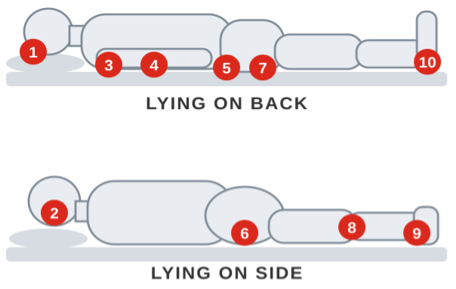
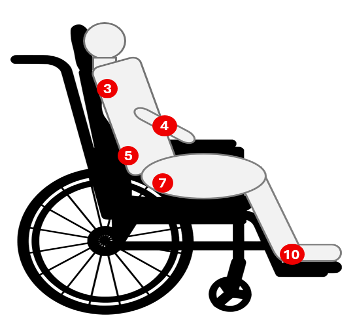
ALWAYS check skin in areas where moisture gets trapped:
- Skin folds (under breast, belly, groin)
- Areas of incontinence or excessive sweat
- Covered skin in areas with poor air circulation (under briefs, braces, shoes, or tubing)
WHEN TO LOOK: During Usual Care
Look during bathing, toileting, dressing, repositioning.
- Ask first and protect privacy.
- Clients in bed/wheelchair all day are highest risk.
WHAT TO LOOK FOR
Changes can look different on different skin tones.
Red, raw skin in damp areas
Red, raw, shiny, or peeling skin in folds, groin, or buttocks.
Note in ALC. Call if it opens.
MILD Incontinence rash on buttocks:
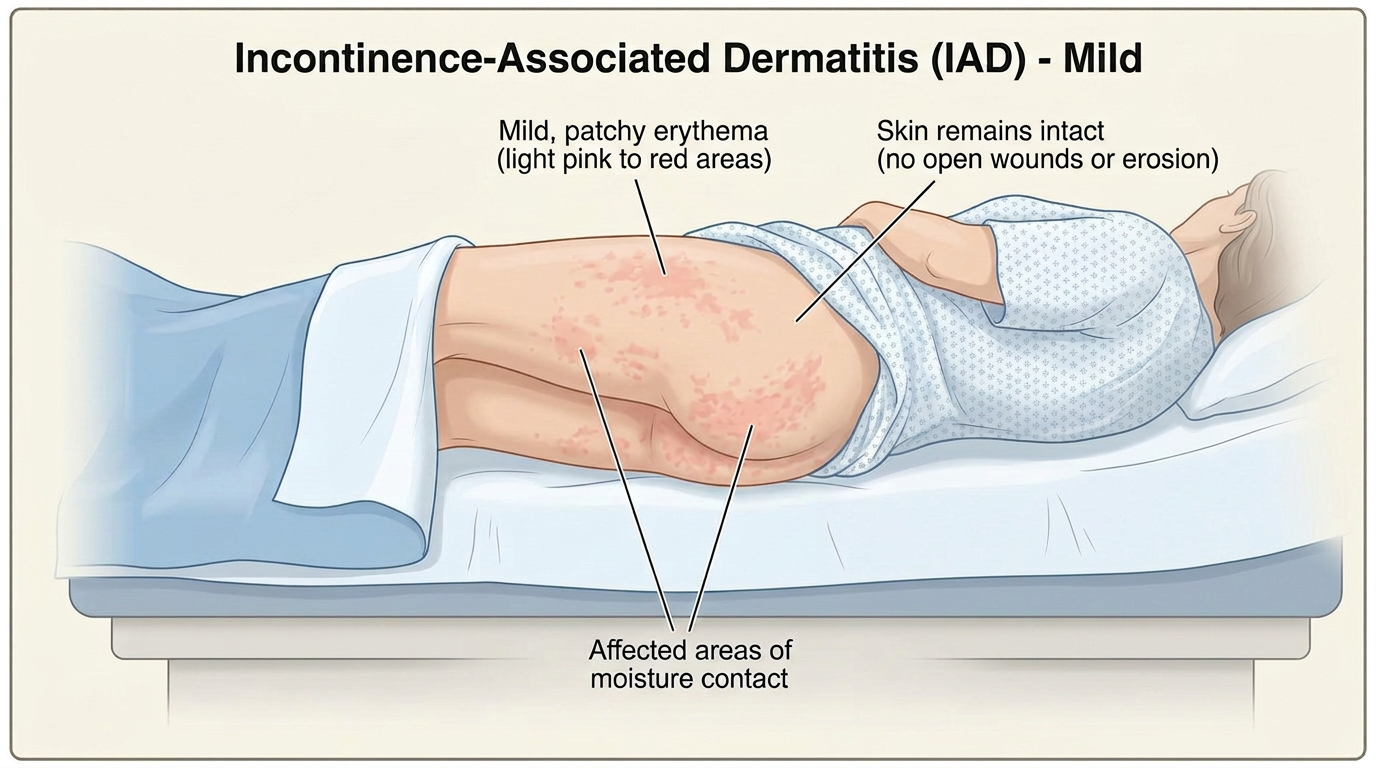
Source: AI-generated
Call the office.
SEVERE Incontinence rash on buttocks:
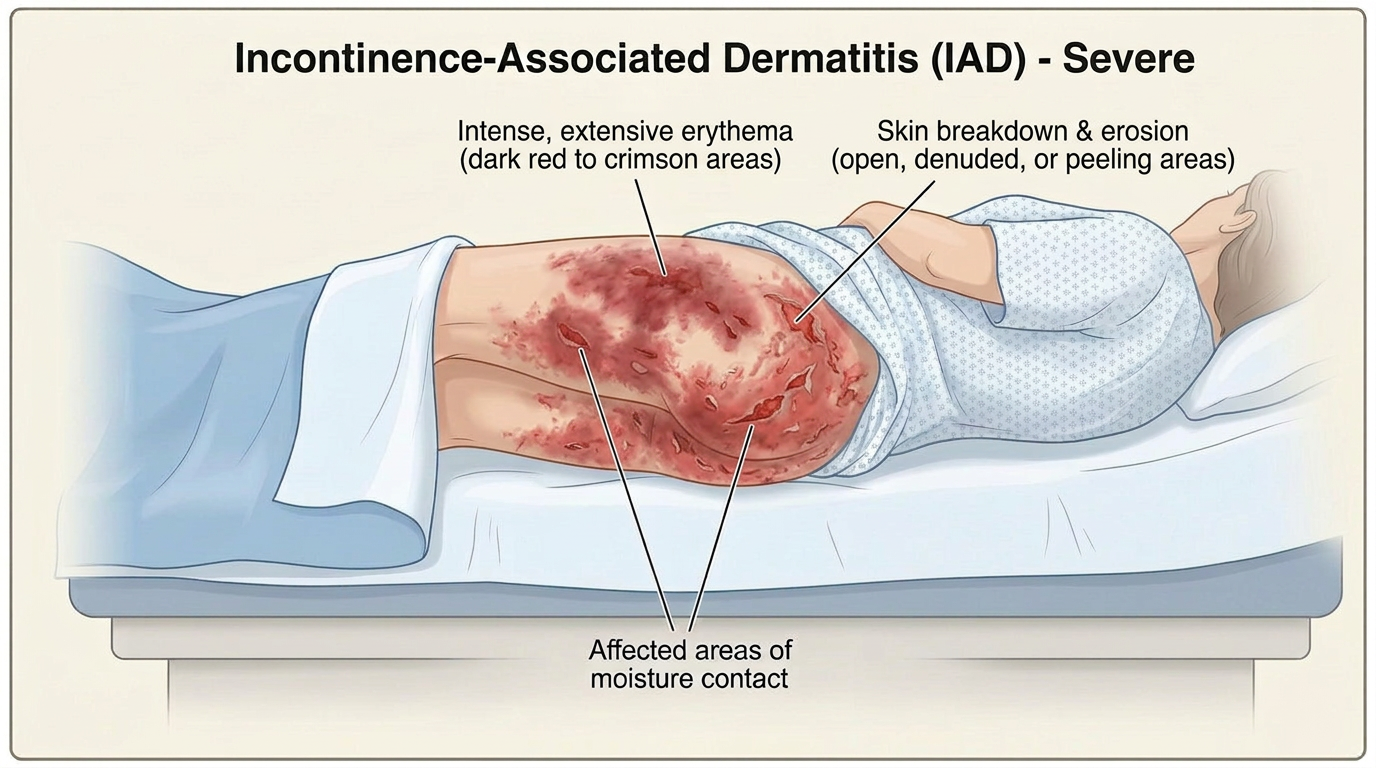
Source: AI-generated
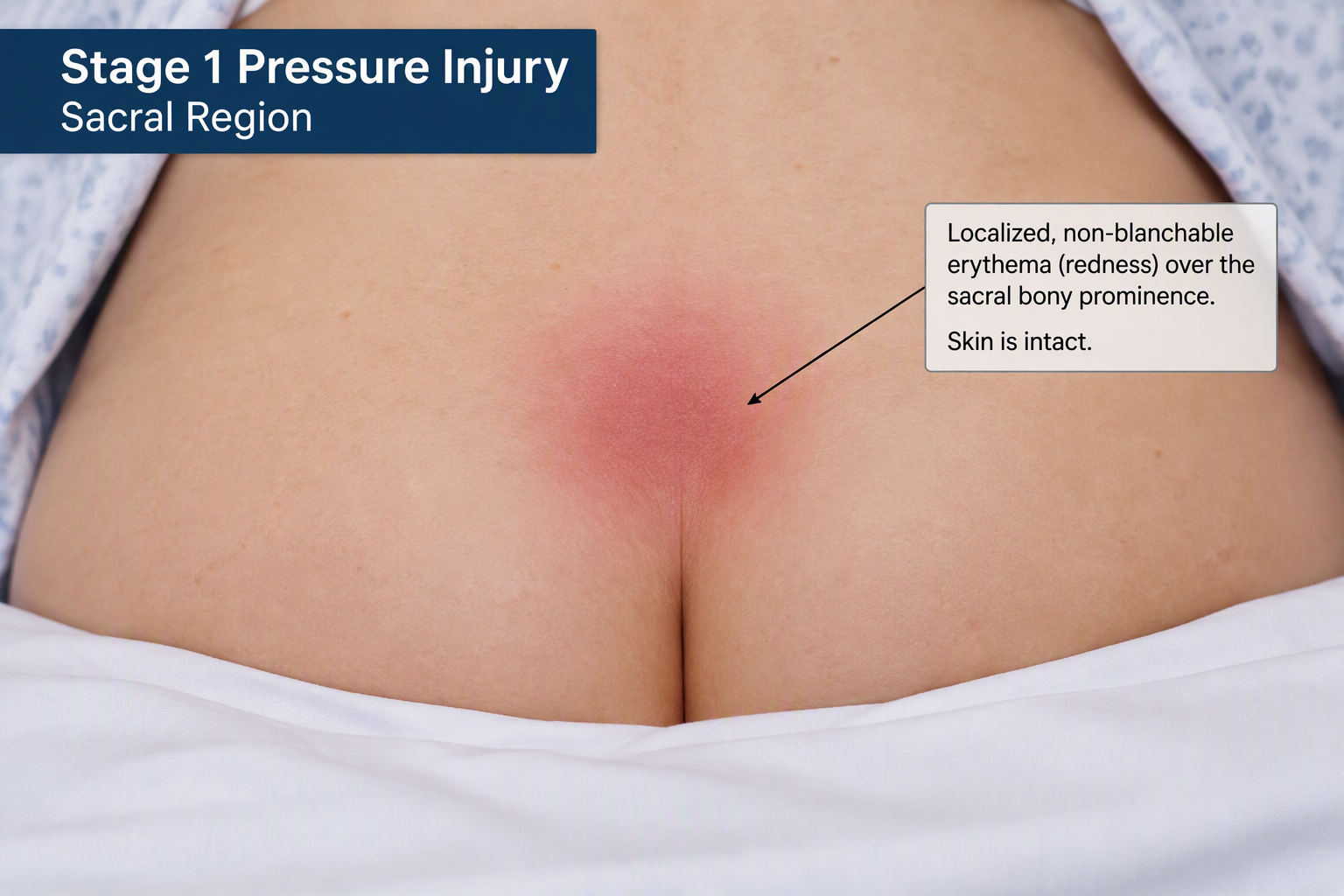
Redness that stays
A red area that does not fade, often over a bony spot.
Note in ALC. Call the office if it opens.
Red patch over tailbone:
Red patch over heel:
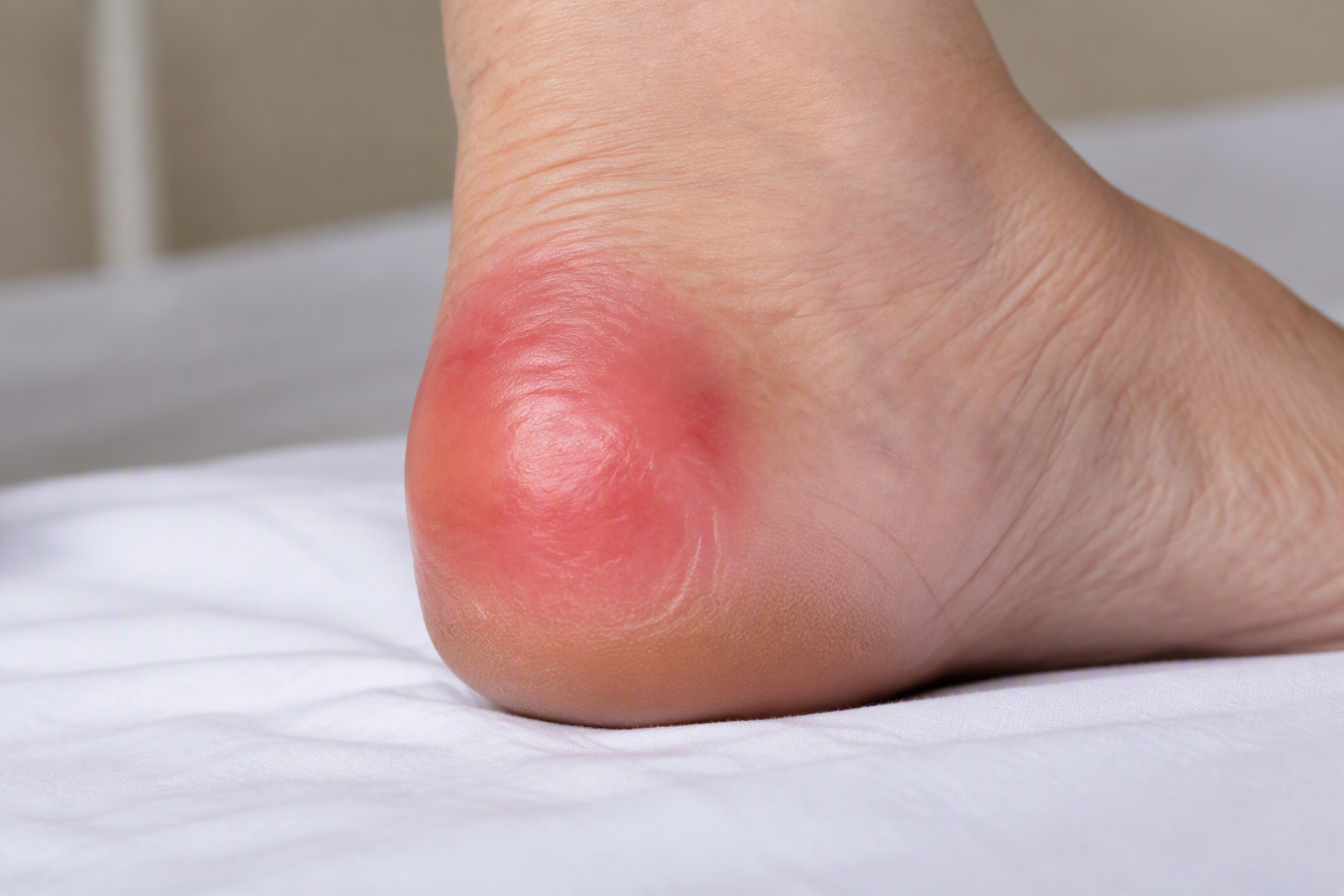
Source: AI-generated
Darker or purple patch
Purple, maroon, bluish, or darker than the client’s usual skin.
Not sure? Call the office.
Red patch over tailbone on dark skin tone:
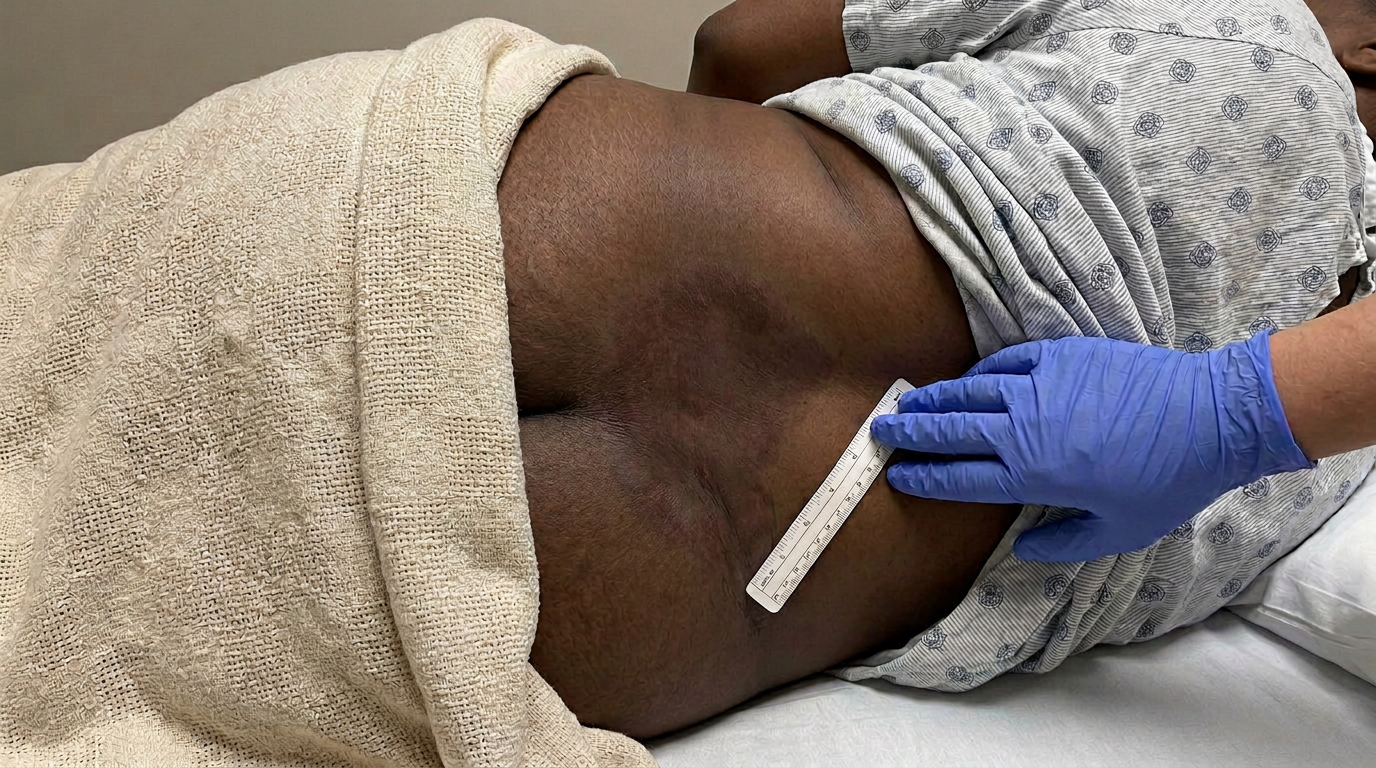
Source: AI-generated
Red patch over heel on dark skin tone:
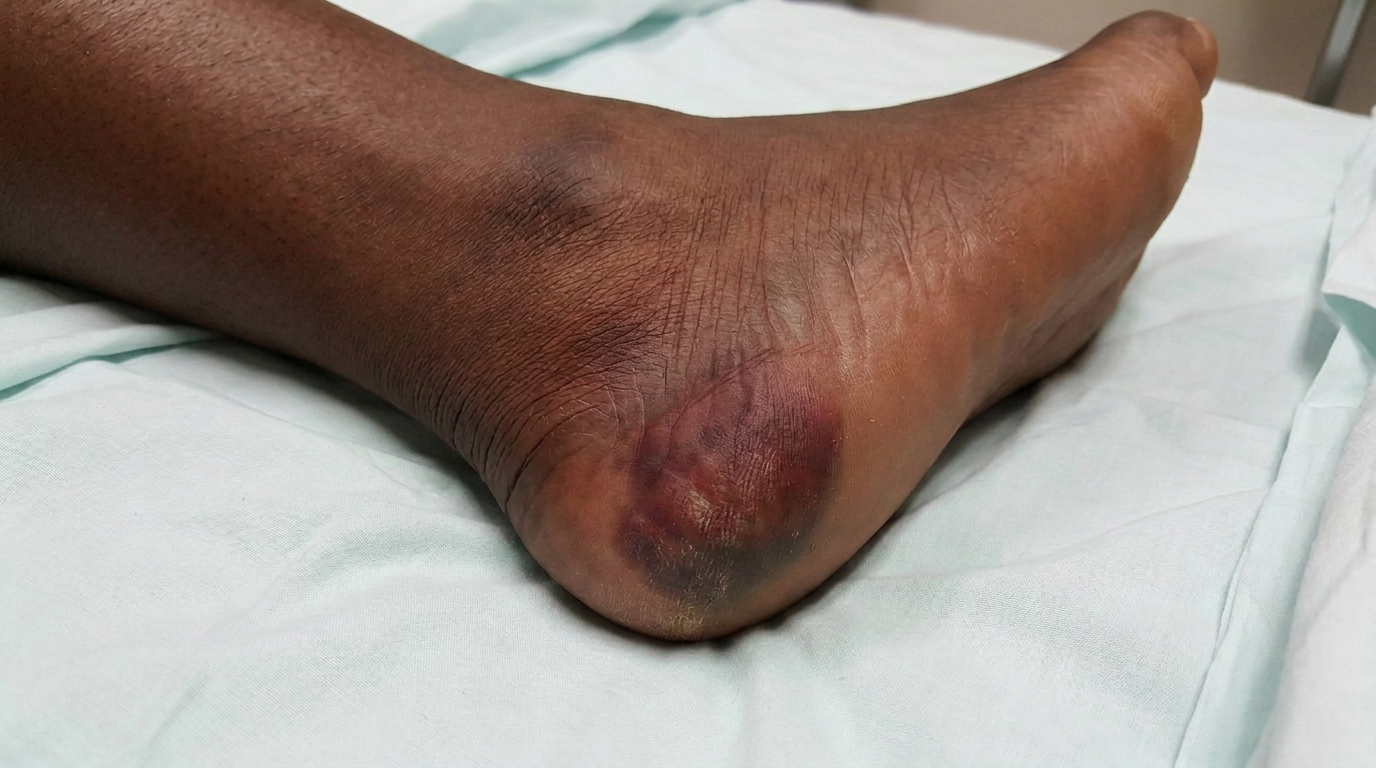
Source: AI-generated
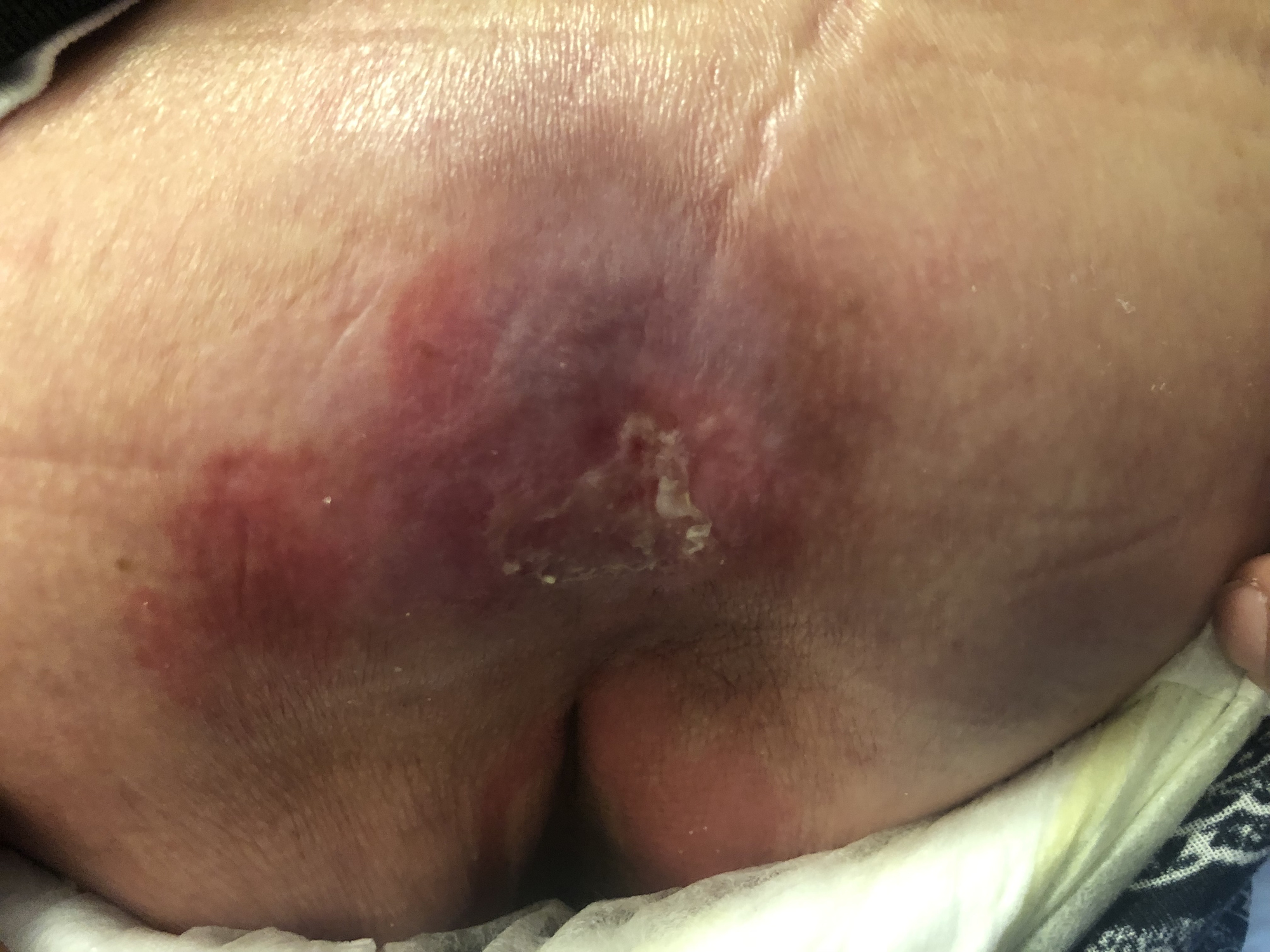
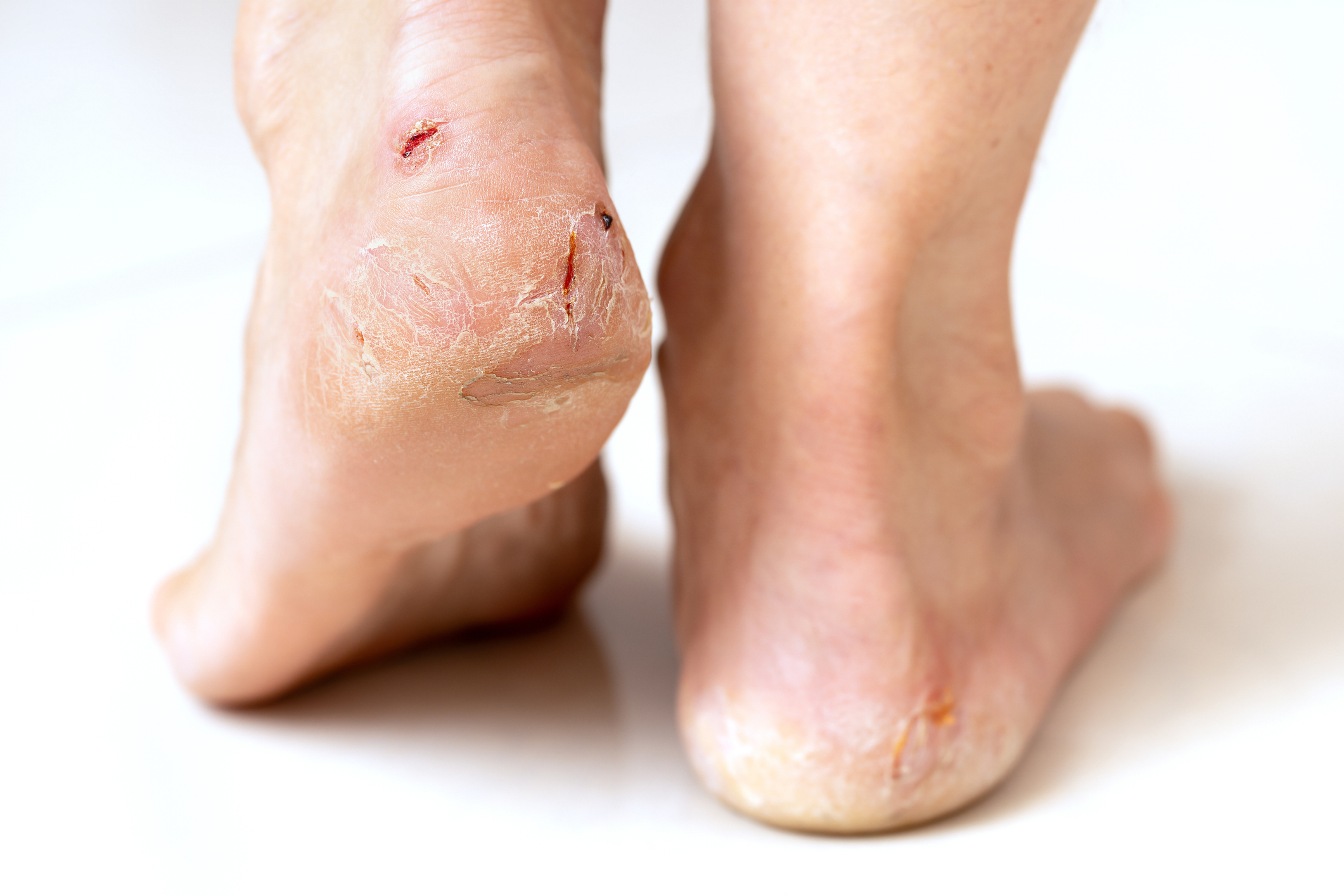
Open or broken skin
Any break: scrape, crack, crater, or bleeding (even small)
Call the office.
Small open area over tailbone:
Small open area over heel:
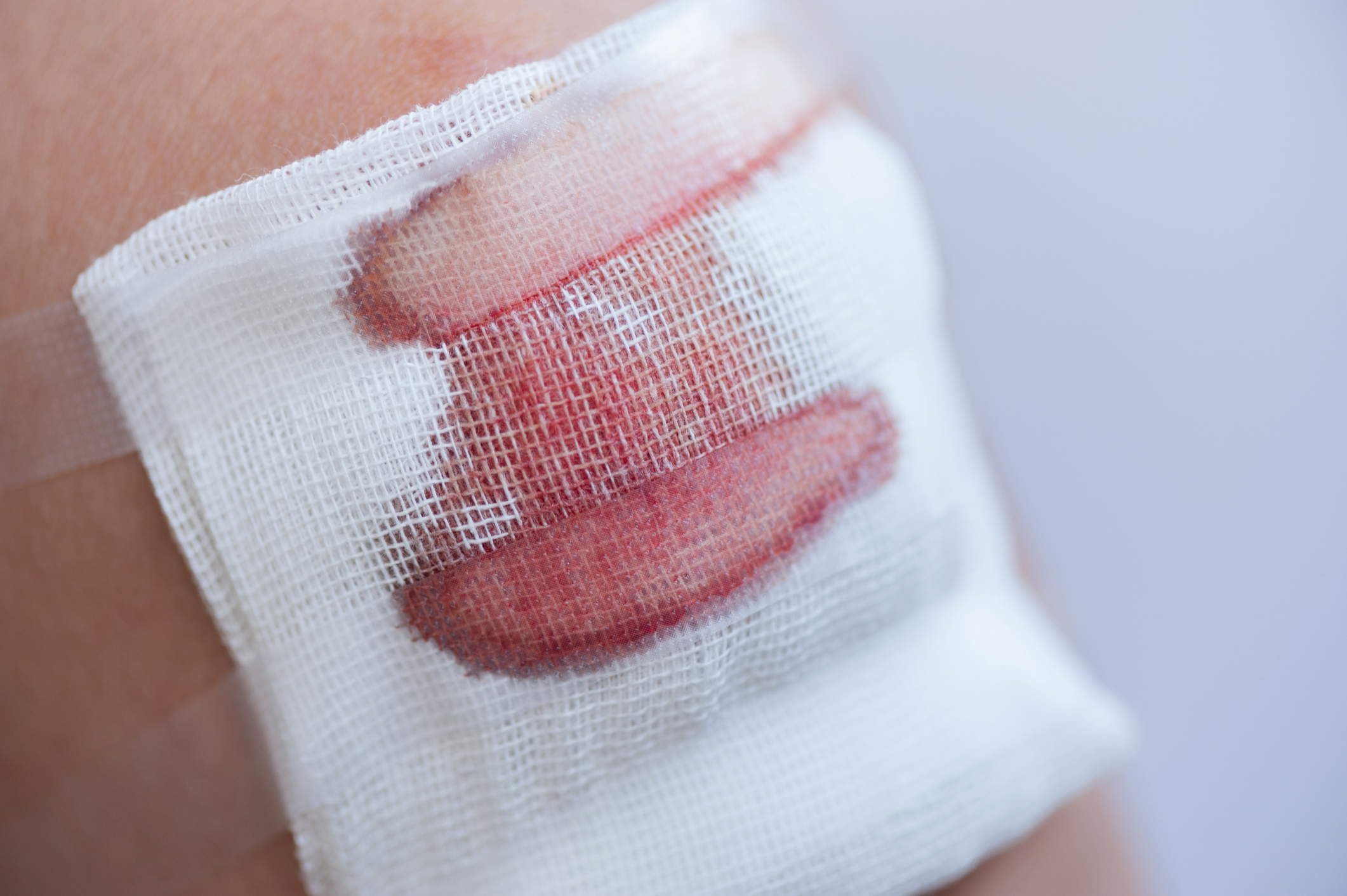
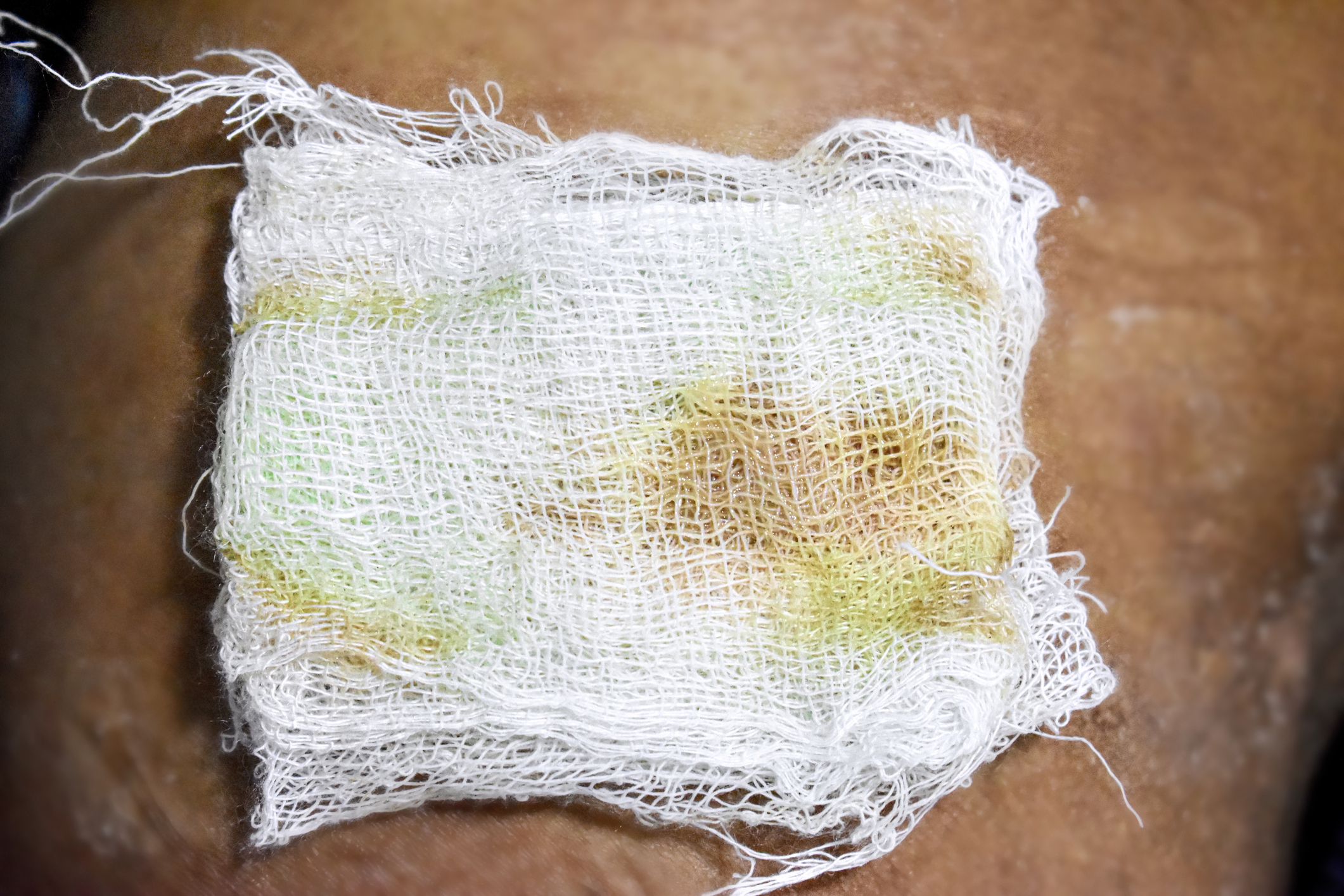
Dressing or wound area change
Dressing wet, dirty, loose or off. New leaking or smell. Redness spreading.
Call the office.
Soaked, redness spreading around a wound dressing:
Dirty, loose, leaking dressing:
Blister or skin tear
Fluid bubble, or thin torn skin on arms or shins. Bruises too.
Bleeding or open? Call the office.
Skin tear with flap:
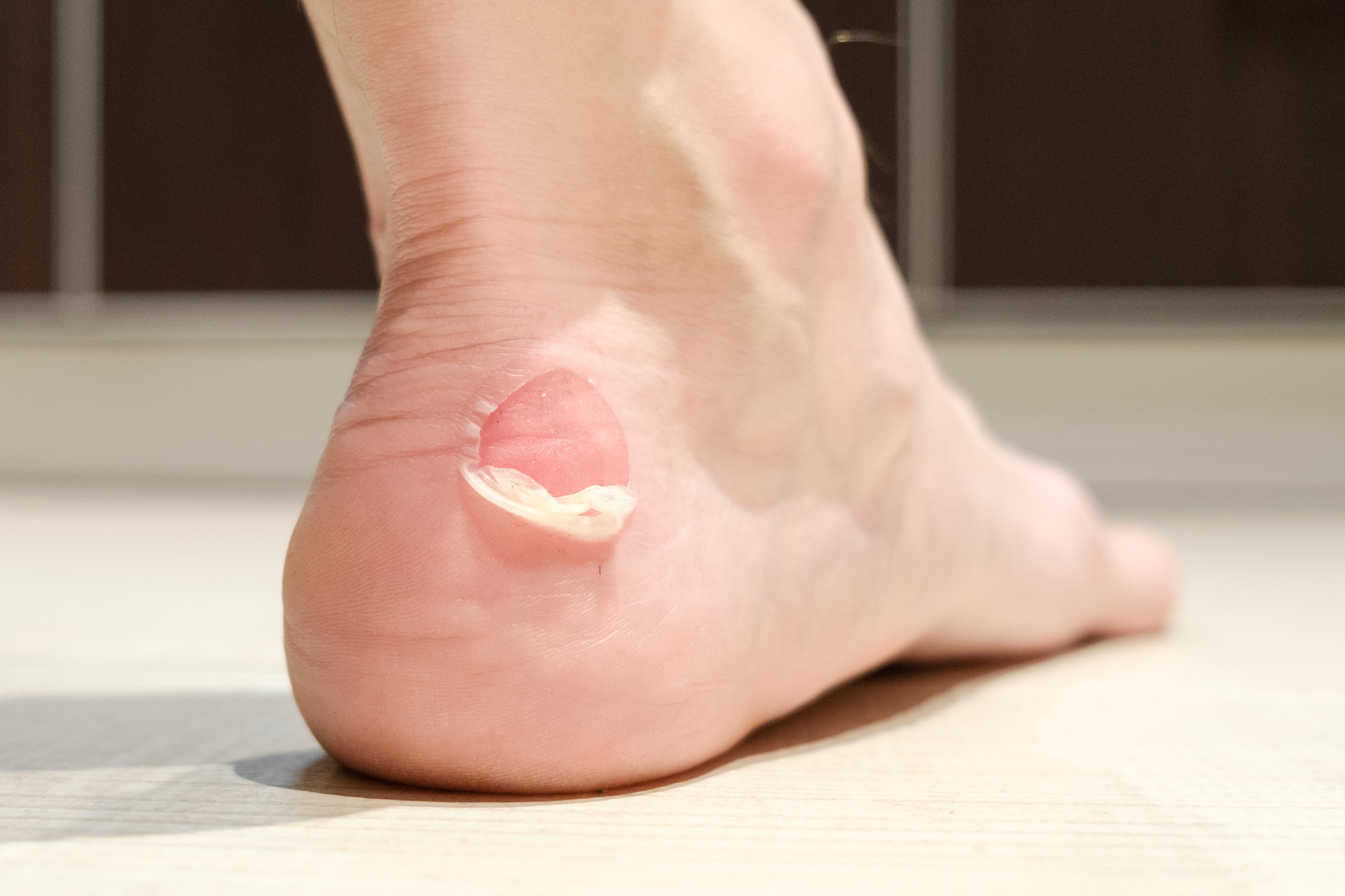
Heel blister:
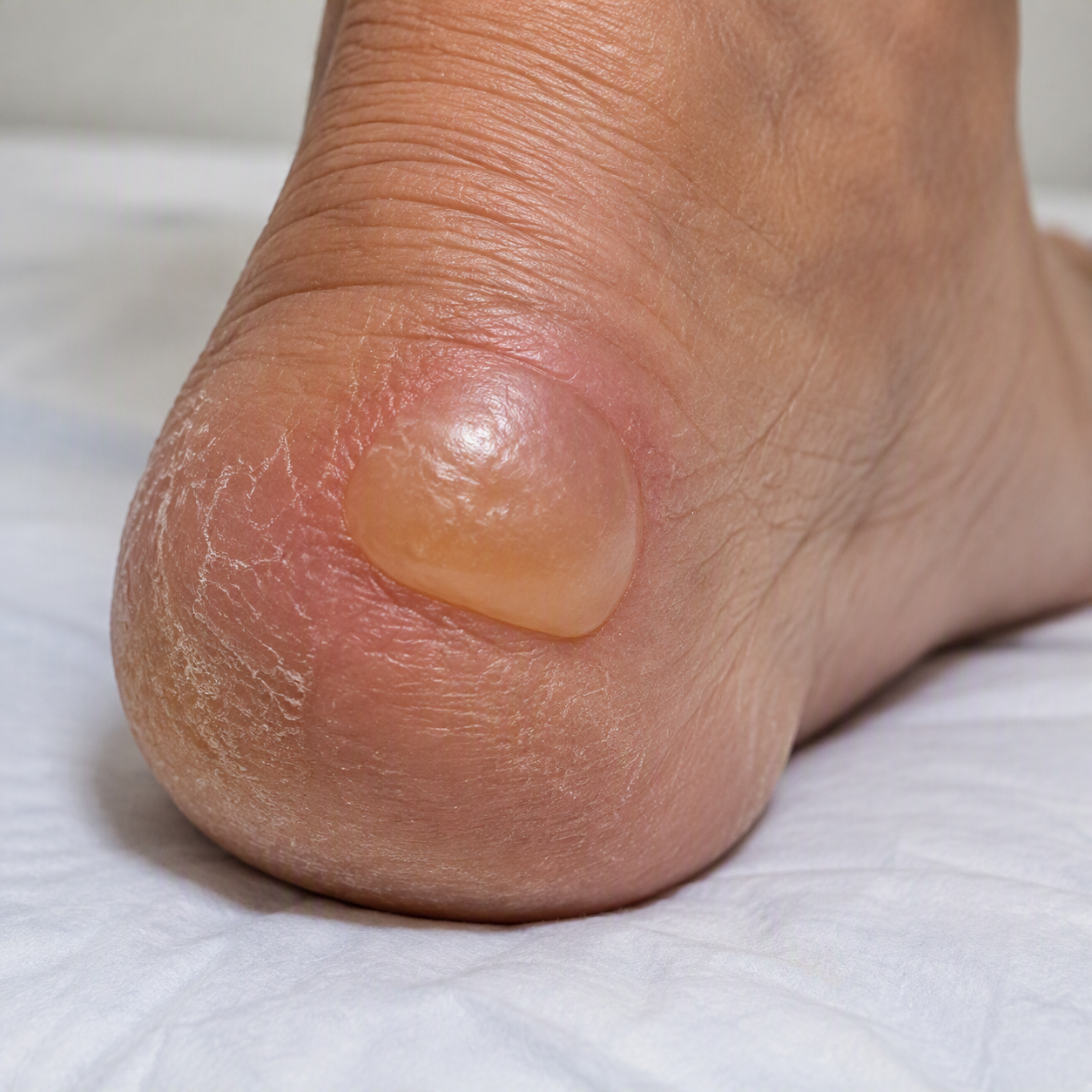
Source: AI-generated
HOW TO DO: Skin Checks
1. Protect. Reposition the client as the care plan allows. Don’t rub the area or add creams or dressings.
2. Call live, during the visit. Report new or worse skin to your CSS or the office. Report even if the nurse or family already knows.
3. Document. Document what you saw, where, the time, and who you told in the ALC note.
4. Follow through. Follow the updated care plan. Report again if it gets worse.
5. If you cannot see the at-risk area or wound. Document what tasks were NOT done and what areas you could not see in the ALC note.
When you see a change, call the office.
Give the facts: CLOSE-UP
|
C |
Colour
|
What colour is the wound?
|
|
L |
Location
|
Where is the wound?
|
|
O |
Odour (Smell)
|
Does the wound smell?
|
|
S |
Size
|
How big is the wound, compared to a coin? (e.g. dime, quarter, toonie)
|
|
E |
Exudate (Leaking)
|
Is there any oozing? Is it a blister wound? Is it bleeding?
|
|
U |
Update
|
Is the wound new? Open? Worse since last visit?
|
|
P |
Pain
|
Does the wound hurt? Itch? Burn?
|
The following is NOT in PSW Scope:
- DO NOT diagnose or evaluate the severity of a wound
- DO NOT remove a dressing to look at a wound
- DO NOT choose creams or dressings for a wound
- DO NOT provide instructions on how to change a wound dressing
You should be doing skin checks during usual care and reporting any changes. Your CSS will arrange a clinical assessment.